
For young Joe Ridley, the phrase “I had to walk two miles to school every day” was pretty close to being right on point. According to Ridley now, it was actually a little more than that.
“We lived off Highway 11 about a mile back down in the woods,” he shared in an interview last week at the church he pastors. “My daddy had that place, 152 acres.
“I went to school in a place called Frank’s Place, where St. James AME Church is outside Bradley,” Ridley recalled. “I walked to school about 2-½ miles. When it was cold, we had to light the pot belly heater when we got there.”
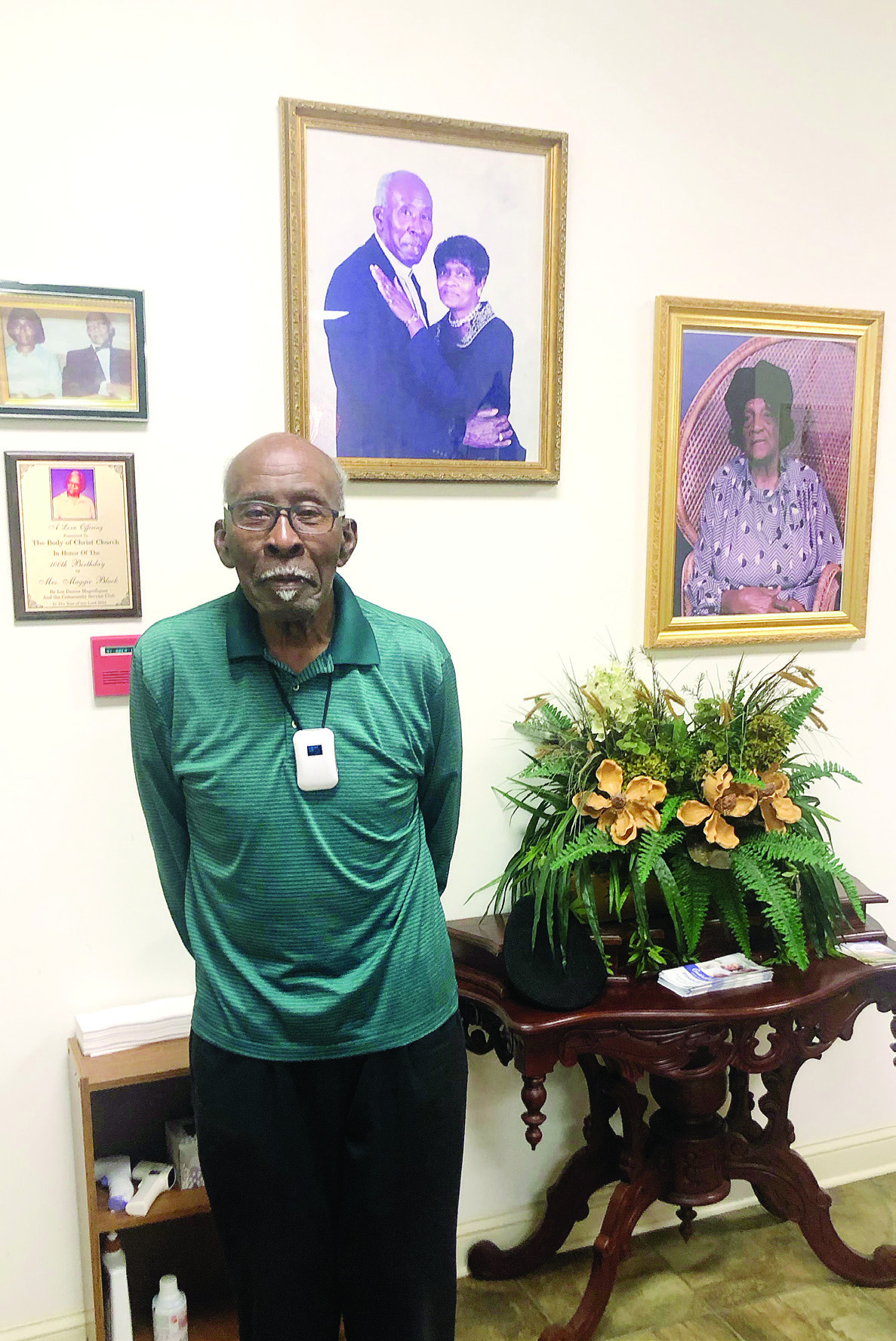
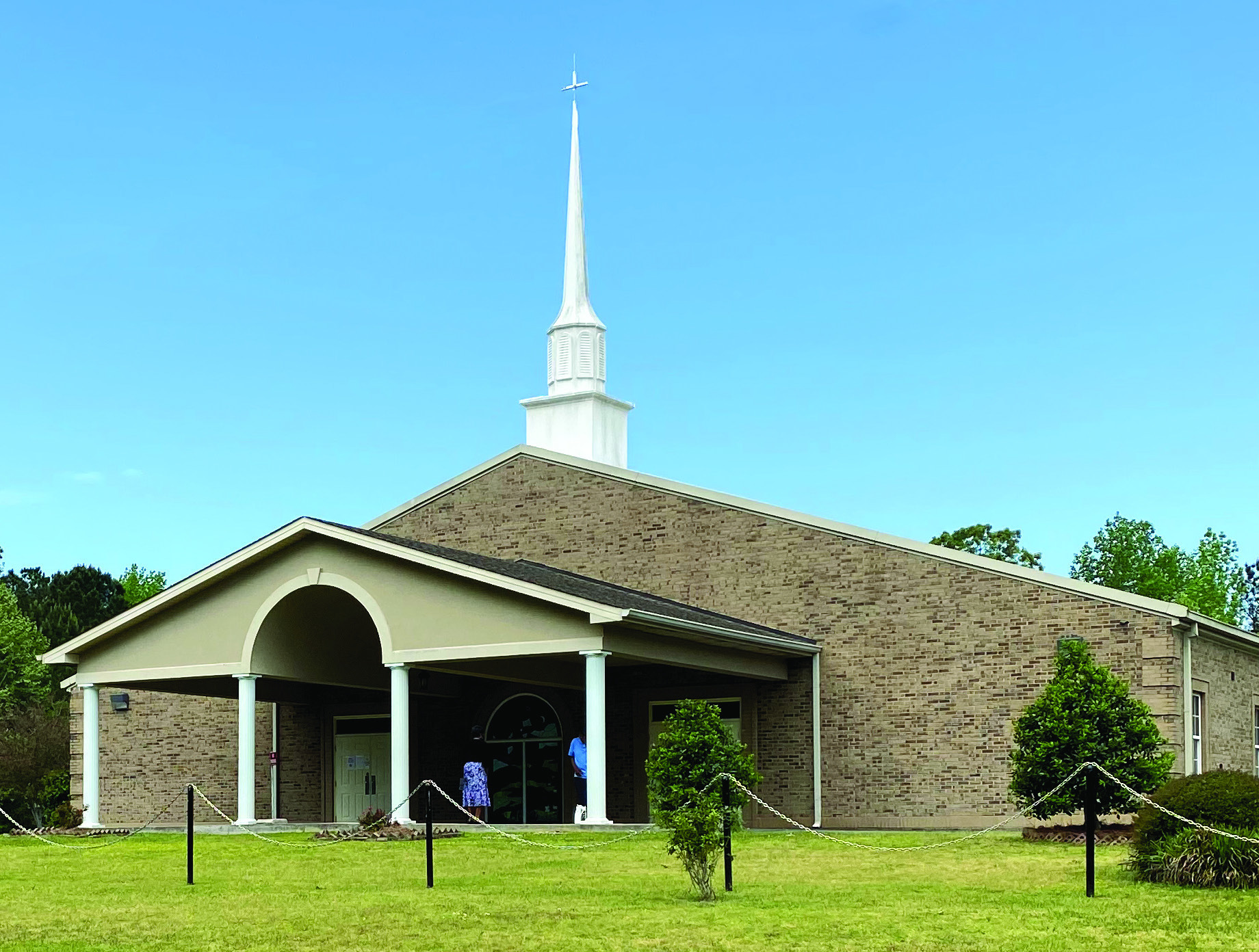
Bishop Ridley, soon to be 86 and the pastor of The Body of Christ church on Gray Highway, remembers the early school years.
“I went to Frank’s Place through the seventh grade,” he said. “They built a school with two rooms. We had two teachers, but sometimes we didn’t have but one.”
Ridley said he went to another location in one grade only.
“In the eighth grade, we went down there where the Gray Nursing Home is,” he recalled, “and we still didn’t have a bus. E.J. Brown is the one who furnished the transportation. It was packed. And, we would have to come up to the road from the house. We had just about a mile from where we were.”
Beginning in the ninth grade, Ridley and others went to a more traditional school but only with somewhat traditional transportation.
“In the ninth grade, we went to Maggie Califf,” he stated. “That’s where I graduated in 1959.”
The transportation was much like today, but not the ones behind the wheel.
“When we got in the ninth grade, they got us some buses,” Ridley recounted, “and the 12th grade students started driving the buses, different ones. Big buses, like the ones they have now.”
Ridley remembers being told that his dad owned a ’29 Model A that he bought in Forsyth.
“It was a convertible,” he said. However, his father, who died in 1952 at the age of 77, like others was a victim of the Great Depression.
“He got broke by the bank in Bradley,” Ridley said. “When it went bankrupt, he lost all his money.”
Ridley, one of five children, said he went to work shortly after high school graduation in 1959.
“The first job I had after high school was at King Cole. They had a canning plant in Macon, where the trains went and turned around, at the roundabout. That’s where I cooked all the food in a pressure cooker until 1961.
“August 18, 1961, I went to work at Armstrong Industries,” he said. “I stayed there 35 years, 313 days, and retired in 1997.
“When I went there, I was doing labor stuff, cleaning up, things like that,” Ridley recalled. “For the 11-12 years before I retired, I was a mechanic, working on scooters, forklifts and other stuff.”
It was when he went to work there that Ridley got his own vehicle.
“I bought my first car after I went to work at Armstrong in 1961 from Julian Jarrell. It wasn’t much good, but I needed a car,” he said.
Ridley started his ‘second job’ in the mid-70s. He professed to being saved in 1971, and his life changed forever two years later.
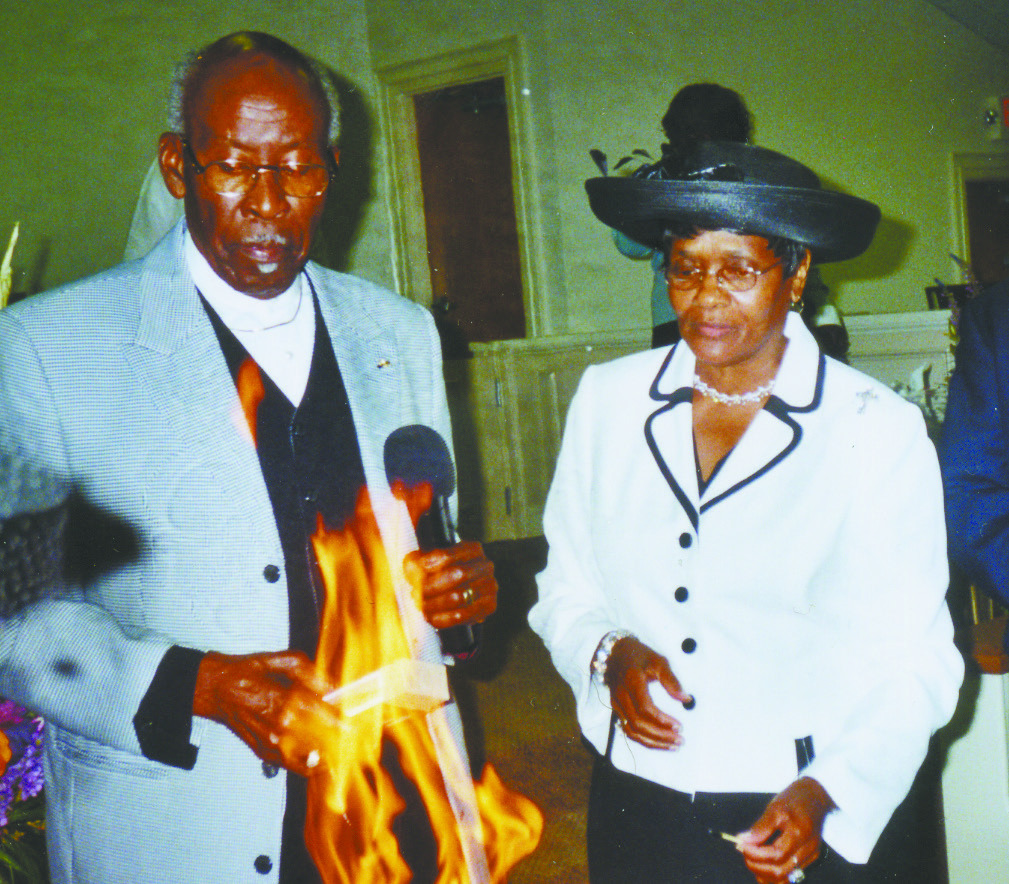
“In 1973 God told me to preach. He anointed me to preach the gospel,” the minister declared. “The people accepted me. They saw the difference in my life.”
Ridley began his ministry at the church Dovie Cherry founded on Highway 11, and he commented in a non-critical tone that the facility was not up to standard.
“When I went to that church in 1971, they had outhouses,” he noted. “The first thing I did when I started preaching was put inside bathrooms in.”
Ridley said he made little money as a pastor in the early days, while he was still employed at Armstrong.
“I was working while I was preaching. I didn’t expect folks to take care of me while I was doing things like that,” he pointed out. “Because they couldn’t. They weren’t making any money.”
The evangelist said many of the church patrons were seasonal workers, employed at the canning plant in Wayside.
“You could smell those peppers a long ways off,” he smiled.
Ridley described the growth of the church as ‘steady’, indicating there was no particular explosion in the membership. However, he – and church leaders – took the plunge early in the 2000s and opted to significantly upgrade.
Church officials began efforts to move to its present location but ran into opposition, and a rezoning request was initially denied. However, an agreement was ultimately reached, and approval for the church about two miles outside Gray was given.
“We moved here in 2004,” the pastor said, adding, with obvious pride, “We borrowed $607,000 and paid it off in five years.”
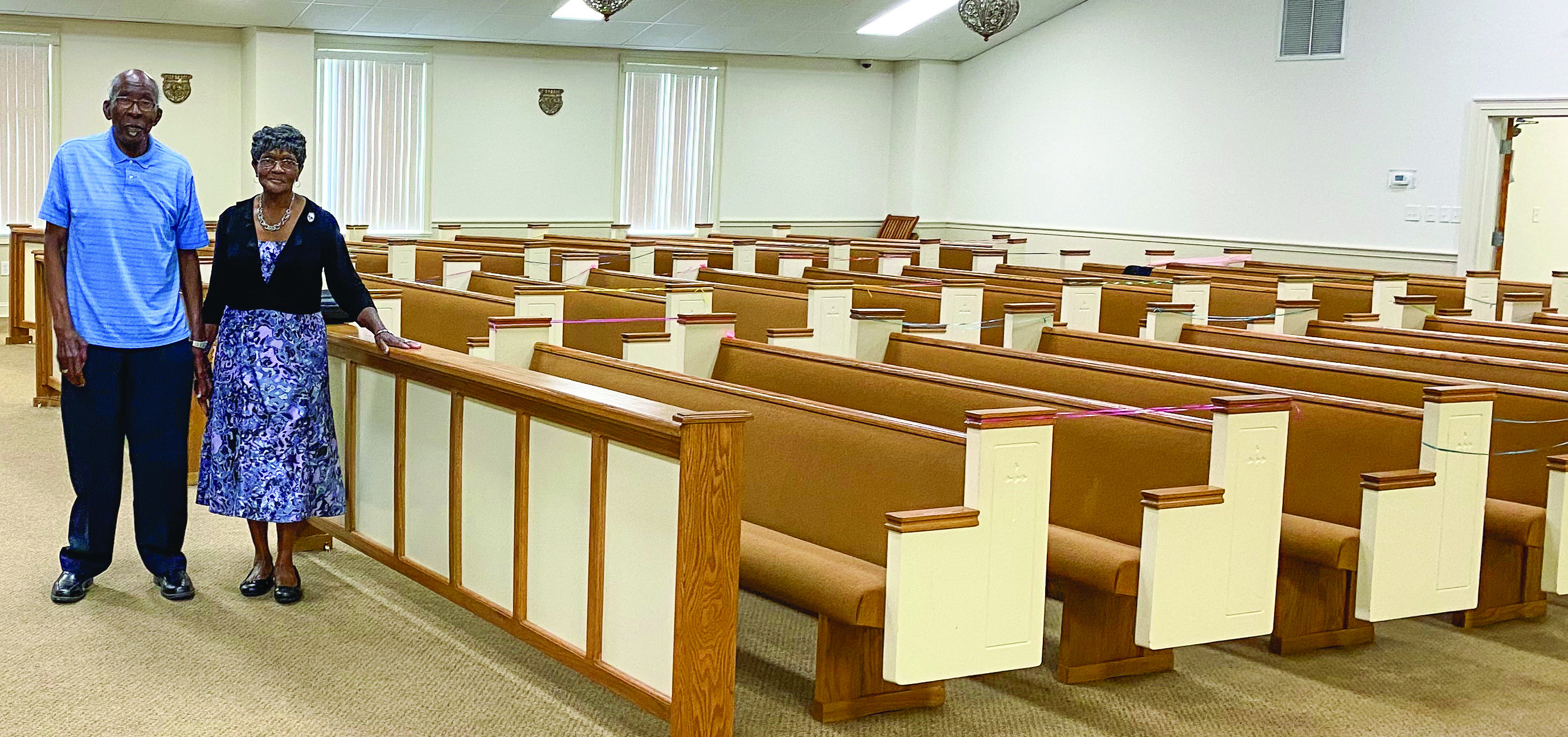
The building is much larger than it appears from the highway. It contains over 5,000 square feet of offices, meeting rooms, classrooms, and a sanctuary that will seat close to 500.
“We have around 200 members and average about 100 each Sunday,” Ridley estimated.
The minister shared that some 36 years ago, he felt that the Lord was calling him again, and his response led to the formation of another church he pastors, about 80 miles down I-75 in Cordele.
“I started that church from scratch,” Ridley recalled. “God sent me there. He spoke to me and told me to go to Cordele.
“I went there a lot of times before I established a church,” he said, “knocking on doors, telling people about Jesus.”
Ridley, who has a mobile home in the south Georgia city and stays two or three nights weekly, explained his routine.
“We have a service there every Friday night and Sunday morning at 8. I then come back and preach here at 11:30 every Sunday.”
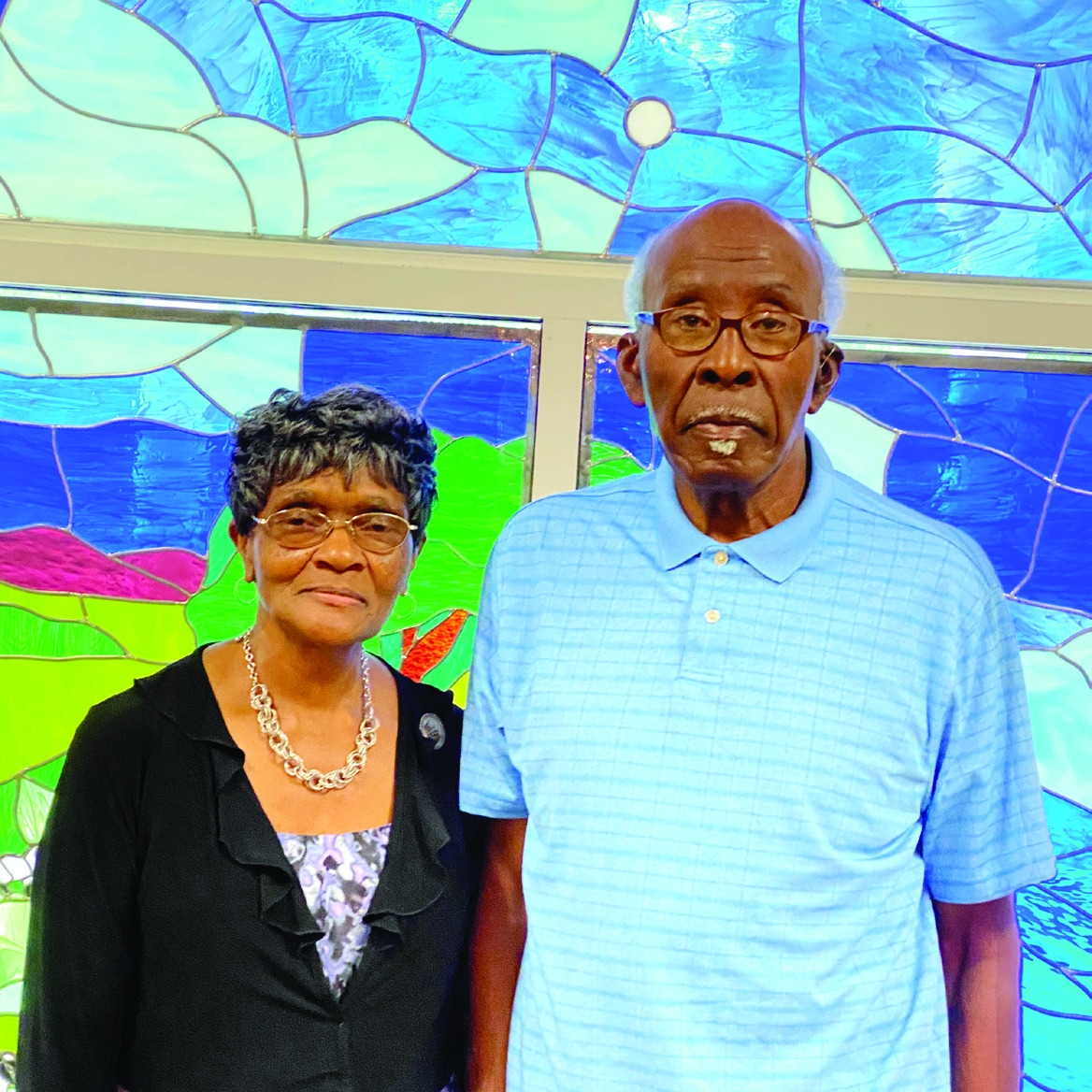
His wife, Dora, who herself has taken courses in Bible ministry, is by his side.
“She is the mother of the church, down there and here, too,” Ridley said. “All the young people look up to her, as their mother, meaning, they honor her in her respected place.”
Lack of that respect is just one of the evils the minister perceives in society today.
“The world is in bad fix,” he strongly declared. “The world system that the people rule over is in terrible shape. They need to listen to what God has to say. That’s why I am preaching and teaching and telling folks. I don’t just go to church. If I see people in the marketplace, in the yard, grocery stores, I tell them about Jesus.
“I am preaching for the Lord. I have to do what he assigns me to do.
“But,” he reiterated, “the world is in bad shape, and the political folks aren’t going to straighten it out. People are going to have to turn to Jesus.”
More interaction of the races in religious activities could only help, Ridley believes, but he has no answer for lack of integration in churches.
“I don’t know,” he admitted. “I can’t understand it. We serve the same God, and there’s no doubt in my mind God has spoken to some people to come here, but they haven’t showed up.”
Despite his advancing age, the pastor does not know how long he will keep preaching.
“Until the Lord says, ‘well done,’” Ridley reasoned. “People ask me when am I going to retire. I tell them ‘in this field of preaching you don’t really retire.’
“God still speaks to me to tell people about Him. So, why should I quit?”
