

As the school year draws to a close, Jones County educators are making sure students are prepared for dangers that can be a close as the phone in their hands.
Nineth graders at Jones County High School heard a presentation April 30 concerning human trafficking and how easily they can fall into to the trap of being victimized.
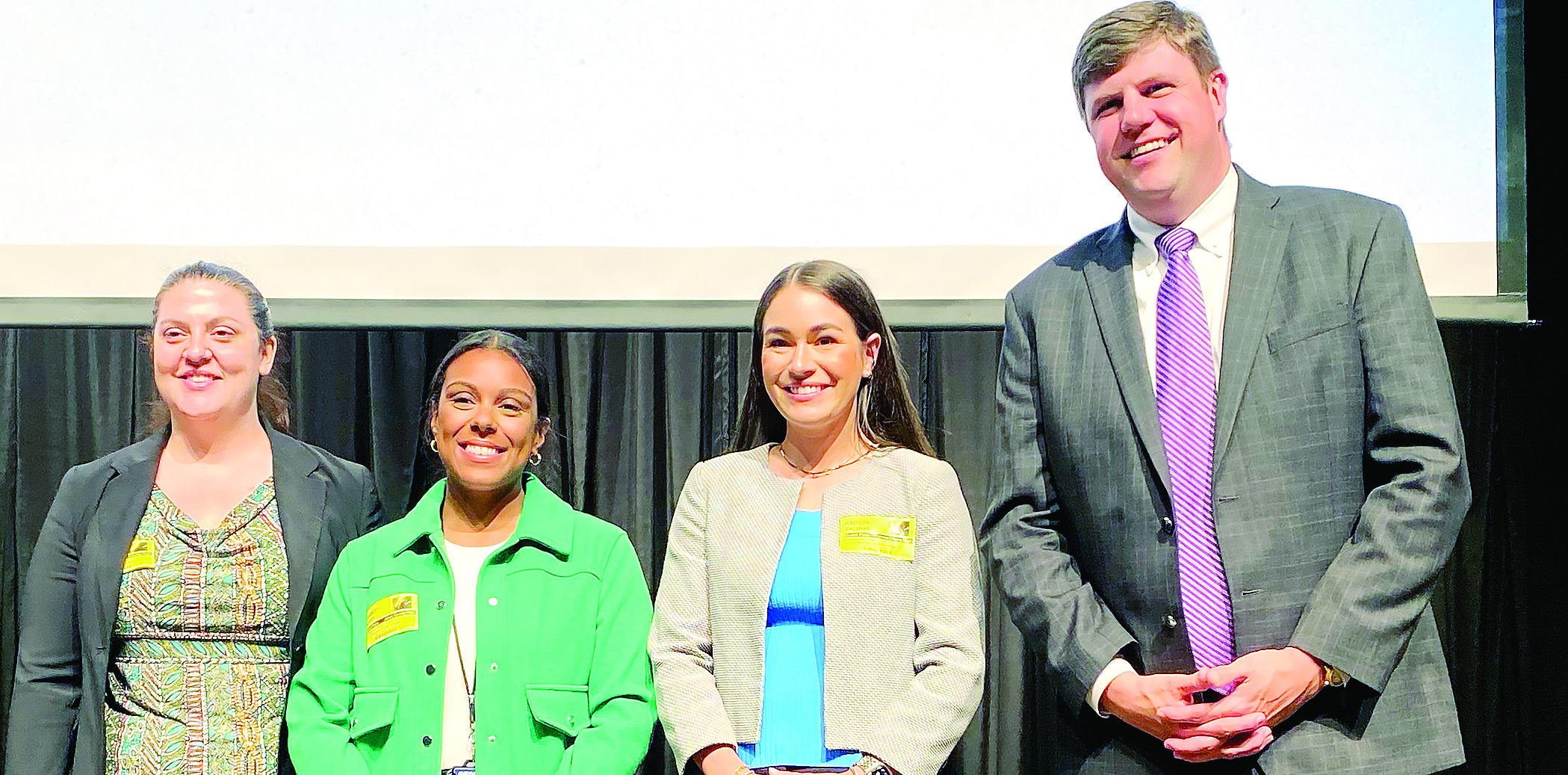
The material was presented in two groups with the boys first. The presenters were members of the Georgia Attorney General’s Office Human Trafficking Prosecution Unit, attorney Kaitlyn Salinas and investigator Frances Reyes.
Human trafficking is defined as the illegal practice of procuring or trading in human beings for the purpose of prostitution, forced labor or other forms of exploitation.
Ocmulgee Circuit District Attorney Wright Barksdale said officials at the high school reached out to him, asking if he would present on the topic.
“Fortunately, we have had few-to-none human trafficking cases in the Ocmulgee Circuit over the last 11 years. As such, I reached out to (Georgia Attorney General) Chris Carr and invited his team to present on the topic,” Barksdale said. “As always, I want the very best for our schools and community. They didn’t disappoint.”
According to the Attorney General’s website, Carr created the first-of-its-kind statewide Human Trafficking Prosecution Unit in 2019. Last year, the Attorney General’s Human Trafficking Prosecution Unit rescued and assisted 129 victims. The Unit has obtained 32 new convictions since January 2023.
Jones County High School Principal Dennis Woolfolk welcomed students to the presentation.
“This is a special day. I’m glad we are able to do this before school is out. We chose the youngest group to present this to instill this information,” he said.
Woolfolk said the information is important, and knowledge is the only way to stop the crimes from happening.
“Listen and put this in your mind. You want to do the right things and be vigilant to what is around you,” he said.
Barksdale was the next to speak. He introduced himself and said he lives in Jones County and his children go to Jones County schools.
He asked the students if any of them knew what a District Attorney does.
“A district attorney prosecutes crimes, but some crimes require special prosecutors,” the DA said.
Barksdale introduced Salinas and Reyes and explained they work for the AG’s office and prosecute human trafficking cases.
Salinas said she received her law degree from the University of Georgia, and her current focus is on sex cases. Reyes explained that she is a mandated law enforcement officer and investigates the cases.
The attorney said they are part of a 12-member team that includes analysts and victim advocates.
Their presentation began with an explanation of grooming, which can make someone do what they normally would not. Salinas said it usually begins online, starting with flattery and discussions about sex.
“They may send you gifts and then ask you to keep secrets from your parent and teachers,” she said.
The attorney said the next step is asking to share nude pictures that can lead to blackmail, which is a crime. She said internet safety is a concern on all apps that have a chat function.
“When you talk to them, you may think you are talking to a child, but it may be an adult trying to entice you into a relationship,” Salinas said.
She said to be suspicious anytime they are asked to take the relationship offline.
“You never know who you are talking to,” the attorney said.
Reyes said there are red flags to watch for such as adults wanting to talk about sex.
“Asking you to keep something a secret is a big red flag,” she said.
The investigator said sexting is illegal and includes making or sending nude images.
Salinas said 17 percent of students have sent a nude image, but that means 83 percent have not.
“An ex-boyfriend or girlfriend can use those pictures to bully you and get you in trouble. Any picture of a minor is child pornography. Simply having that on your phone is a felony,” she said.
Reyes said sextortion was a form of child exploitation and can happen anytime a nude image is shared. She said it can be in the form of demanding money or sexual favors.
“From those pictures, tech savvy people can take over your accounts,” she said.
The investigator said that can be people in Nigeria as happened in a recent case.
“Once you send one of those photos, it’s out there forever. Don’t take an image you don’t want everyone to see,” she said.
Reyes said one of the tactics to get a photo is claiming to work for a modeling agency. She said the use of false identification happens often.
“If you don’t know the person personally, just don’t engage,” she said.
Reyes said do not comply with demands.
“If you are threatened, talk to an adult you trust,” she said.
The investigator said the threats should be reported to cybertipline.org, and it is important not to delete the account.
“It’s evidence,” she noted. Salinas said there are two categories of trafficking, labor and sex. She said the victims are usually 16-17.
“Adults paying for sex is a crime for both sides, and if they are under 18, it’s trafficking,” she said.
The attorney said it does not matter if the parties are agreeable or if they are aware of ages. She said anyone who participates is guilty of a crime. The penalty for trafficking a person under the age of 18 is 25 years to life.
Salinas emphasized that 25 years in prison is the minimum sentence.
“We don’t want you to become a victim. It’s not prostitution or pimping; it’s sex trafficking,” she said.
Reyes said grooming takes place on Facebook and TikTok.
“It can be a slow process; you need to be aware of it,” she said.
They concluded the presentation talking about gangs and what to watch for not to become involved. Reyes said that includes tattoos, hand signals and wearing colors.
“People join because they are looking for a sense of belonging and a desire for power,” she said.
She said gangs can be prevented with positive role models and involvement in positive activities such as sports.
“You need to understand the risks of being in a gang. It’s a lot easier to join than to get out of,” Reyes said.
Salinas said the criminal activities of a gang can make all the members a party to the crime.
“Every person involved is guilty. You don’t even have to be there,” she said.
Woolfolk concluded the program with a statement to students. He shared that before he was an educator, he worked for the Department of Juvenal Justice.
“Something you think is very simple can change your whole life,” he stated.
