
Suicide is one of those uncomfortable topics that unfortunately cannot be avoided, especially when it hits close to home.
The Jones County Suicide Coalition was created in 2019 when the number of deaths by suicide got the attention of the Georgia Department of Behavioral Health and Development Disabilities when statistics placed the county 10th in the state.
Jones County was not alone in alarming statistics. Richmond County was also struggling with a high suicide rate, and Augusta University applied for and received a grant from DBHDD to help both counties reduce those numbers.
Since that time, a dedicated group has held monthly meetings to try to shine a light on the issue. The numbers have improved, but suicide deaths continue to plague the community. Suicide was the ninth leading cause of death in Jones County from 2013-17 and the No. 1 cause of death for the time period for ages 15-19. It was the number two cause of death for ages 45-54.
Jones County had eight deaths by suicide in 2016 and seven in 2018. That number spiked to eight again in 2022 but dropped to one in 2023. Last year the number of deaths by suicide was four.
During 2021-24, the number of deaths by suicide exceeded the number of traffic fatalities. Another startling fact is the suicide numbers do not include deaths from overdoses unless a note is left by the victim.
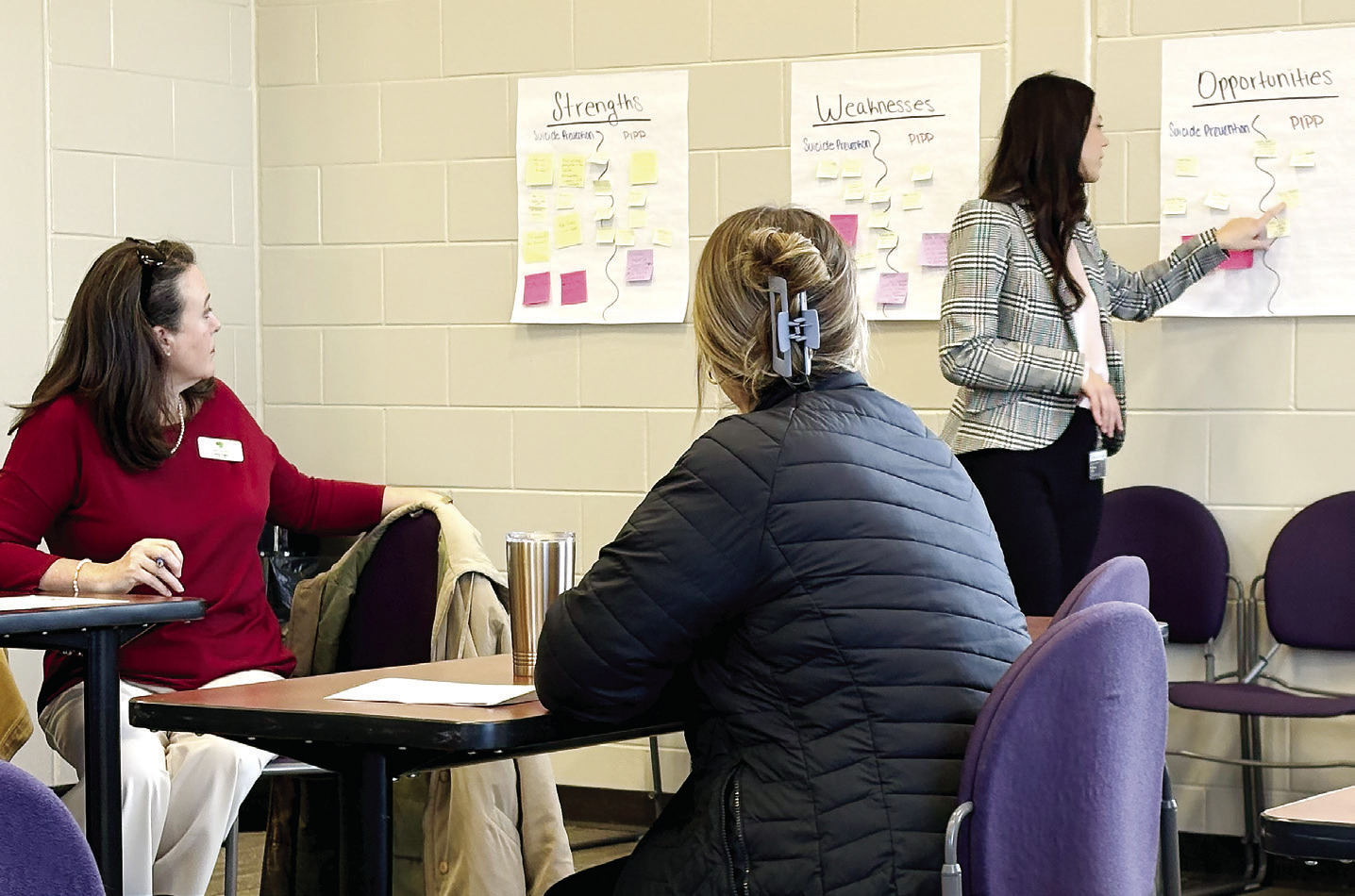
The coalition met Jan. 28, led by program director Ashley Prager with Augusta University. Prager said ideas are still needed to reach the populations who need help.
There is training in Jones County to recognize someone in crisis and warning signs. That training is called Question, Persuade, Refer (QPR). The training is free of charge and takes 90 minutes.
The training sessions are coordinated by Joy Carr. So far Jones County has 300 gatekeepers who have received the training.
Getting help has gotten easier since the creation of the 988 crisis line that is available 24/7 nationwide. Resources are listed on the Link Tree page with information for help that is available locally, across the state and nationally. Resource information is also available on the Jones County Suicide Coalition Facebook and Instagram pages.
Carr and Dr. Martha Tingen made a presentation of the Jones County Board of Education about the work being done by the coalition at its Jan. 9 work session and Board of Education member Kim Washburn was attendance at the Jan. 28 coalition meeting.
Chris Pope with Music Medix and his students distributed 2,700 suicide prevention bracelets and information during the City of Gray’s Christmas parade.
Hope Givers
Jones County High School held an event Jan. 27 that sparked excitement in the effort to inspire positive mental health conversations and strategies to students, and students from all grade levels were able to attend.
The program, Hope Givers Live, was arranged by Carr in her capacity as Jones County Family Connection coordinator.
In a later discussion about the event, Carr said she partnered with Resilient Georgia and Resilient Middle Georgia to fund the live event and kick off the roll out of this material for students.
“This event gave them a sneak peek of what is to come and got them excited about the content,” she said.
The coordinator explained that Hope Givers Live is a high energy approach to present positive mental health conversations and strategies to students.The programs are presented by young Georgia-based actors, musicians and social media influencers.
She said one the presenters was ‘the backpack kid’ who created the floss dance.
“They talked about the success experienced in their careers and about doing what they love while also being transparent about their own struggles with mental health.”
Carr saidit is a great reminder that life has its ups and downs.
“They each are successful and seem to have life all together, but they have also struggled with their own mental health, also a greatreminder that social media can only show you one side of the story.”
She said students practiced positive affirmation to themselves and others, learned the importance of setting goals and practicing self-care. Students also were promptedtoidentify trusted adults at school, knowing their school counselors and where to find resources.
“They also talked about 988, making sure students know what it is and that 988 is available anytime for support and crisis calls,” Carr added.
Hope Givers Foundation partnered with PBS to develop the Hope Givers series available on GPB.She said there are 16 episodes available online that tie into Hope Givers curriculum that align with Georgia DOE Standards to use in the classroom.
“This event kicked off the use of that curriculum at JCHS, which will be used duringstudent advisement time,” Carr explained.“All of this content is free to use and view. It is available for parents to access online through GPB.”
PIPP
Partners in Prevention program coordinator Giuliana Oliff started the Jan. 27 meeting with an overview of the program last year and plans for the coming year. She said the goal is continued reach to spread information about the dangers of vaping and the use of tobacco and alcohol.
She said the focus is on middle school students and ninth graders, and the program presents evidence-based courses at both the middle schools and high school.
The coordinator stated that one electronic cigarette has the same amount of nicotine as 20 tobacco cigarettes, which makes it highly addictive. She said the social norms campaigns at the school is data driven, and the posters are vetted by students to make them more effective.
The campaign focuses on the positive numbers of how many students are not vaping, smoking or using alcohol.
Oliff said, instead of stating 5 percent of their peers are vaping, the poster would focus on the 95 percent of students who do not. She said there were five campaigns between Clifton Ridge and Gray Station middle schools. Those programs are Catch My Breath and Project Alert with the goal of providing information so students can make good choices and skills to help them resist using alcohol, tobacco and e-cigarettes.
The next round of classes is scheduled to begin Feb. 5.
