
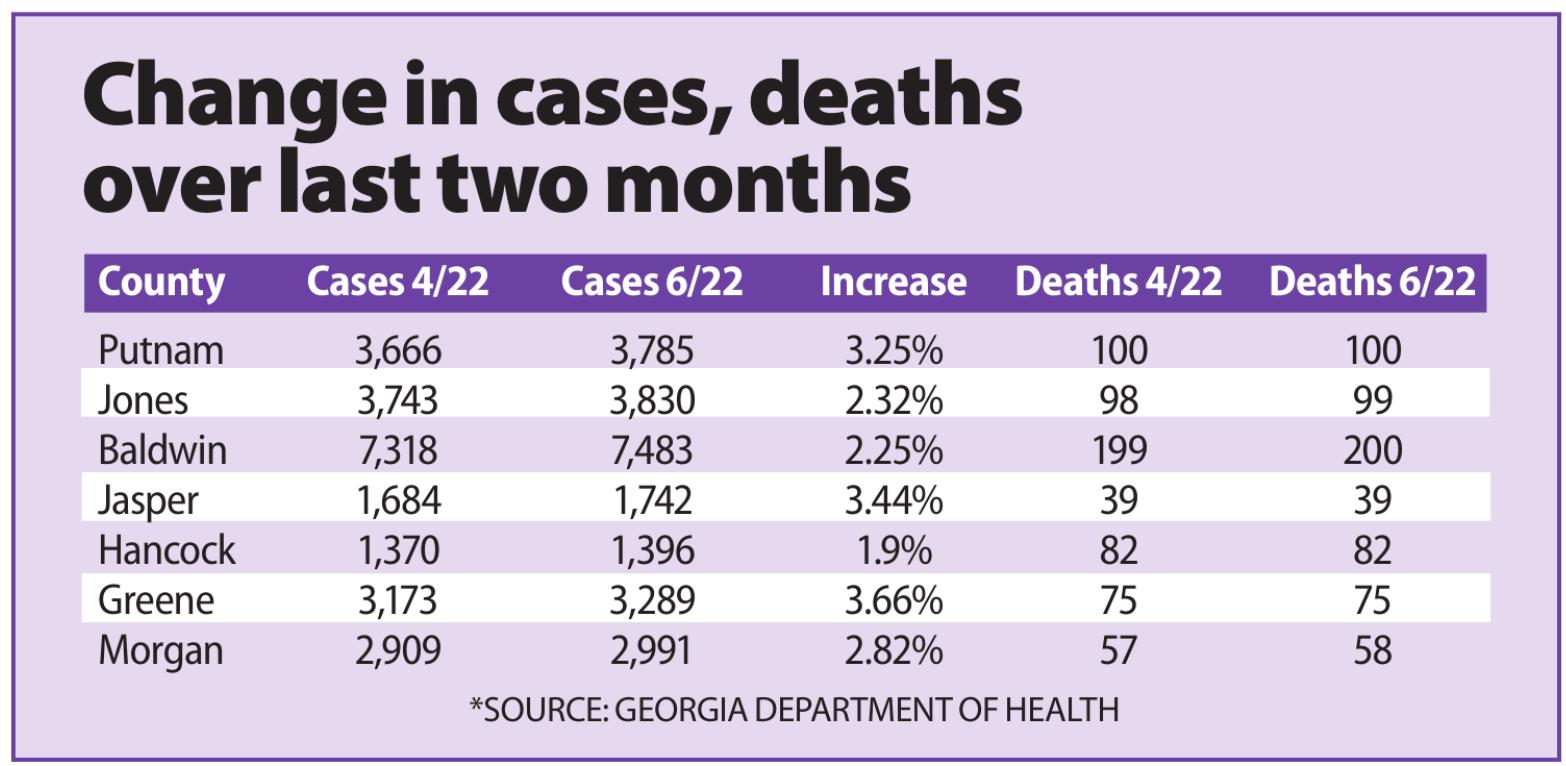
New cases of COVID-19 have been on the rise since April 22 but remain well below the original Omicron variant outbreak last winter.
Also as of April, the Georgia Department of Health has switched to weekly reporting of COVID-19 information as opposed to daily, so data used here is effective as of June 22.
In that two-month period, total cases have gone from 1,946,233 to 2,035,187, an increase of 88,954 or 4.6 percent. Total deaths have gone up from 31,504 to 31,995, an increase of 1.6 percent. That suggests the latest variants, while still spreading easily, are less deadly.
According to the state, a total of 115,735 Georgians have been hospitalized since the beginning of the pandemic with 16,200 ICU admissions.
Vaccinations and boosters
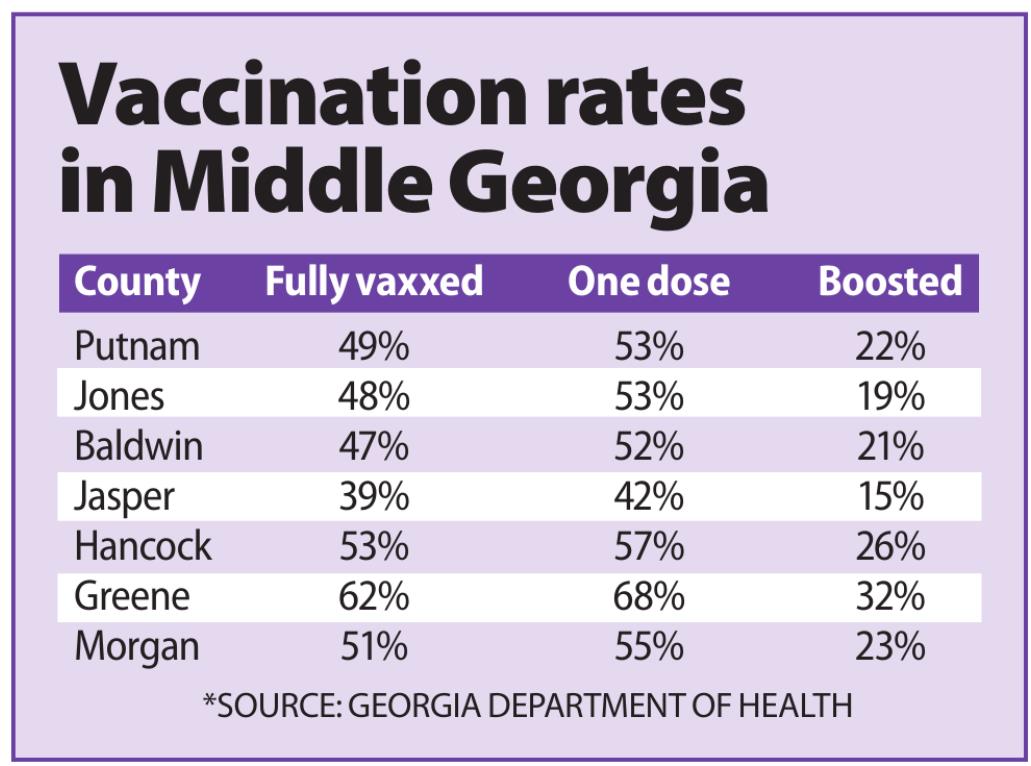
A total of 15,324,627 free vaccines have been administered in Georgia. That includes 6.7 million having had at least one dose, 5.9 million fully vaccinated and 2.5 million receiving an additional dose.
The CDC announced May 19 that it strongly recommends children older than 12 who are immunocompromised and those 50 and older to receive a second booster shot.
In that announcement CDC director Dr. Rochelle P. Walensky said, “Children 5 through 11 should receive a booster dose at least five months after their primary series. Vaccination with a primary series among this age group has lagged behind other age groups leaving them vulnerable to serious illness. With over 18 million doses administered in this age group, we know that these vaccines are safe, and we must continue to increase the number of children who are protected.”
According to the CDC, since the pandemic began, more than 4.8 million children ages 5 through 11 have been diagnosed with COVID-19, 15,000 have been hospitalized and, tragically, over 180 have died. As cases increase across the country, a booster dose will safely help restore and enhance protection against severe disease.
Boosters will be necessary to protect Americans from COVID-19 as immune response wanes over time, according to the National Institute of Health.
The agency says mixing vaccines may enhance the immune response, and it increases flexibility for when people need a booster dose but doses of the vaccine they first received are not available.
Children under 5 years old
The CDC announced June 18 that all children 6 months through 5 years old should receive a COVID-19 vaccine. That accounts for an estimated 20 million children who have previously not been eligible for a vaccine.
The agency resorts that both the Pfizer-BioNTech and Moderna vaccines are safe and that those vaccines will continue to undergo the most intensive safety monitoring in U.S. History.
“Together, with science leading the charge, we have taken another important step forward in our nation’s fight against COVID-19,” Walensky said. “We know millions of parents and caregivers are eager to get their young children vaccinated, and with today’s decision, they can. I encourage parents and caregivers with questions to talk to their doctor, nurse or local pharmacist to learn more about the benefits of vaccinations and the importance of protecting their children by getting them vaccinated.”
International travel easier
The CDC announced June 10 that the order requiring travelers to show a negative COVID-19 test or documentation of recovering from COVID-19 before boarding a flight to the United States would be canceled, effective June 12.
This is the result of available of effective vaccines and available therapeutics, which have led to high rates of vaccine- and infection-induced immunity at the population level in the United States.
The TSA also lifted a rule requiring masks for public transportation after a federal court ruling in April. Airlines were quick to follow suit.
American, Delta, United, Southwest, JetBlue, Alaska, Hawaiian, Spirit and Frontier were all quick to follow suit in dropping mask mandates.
