
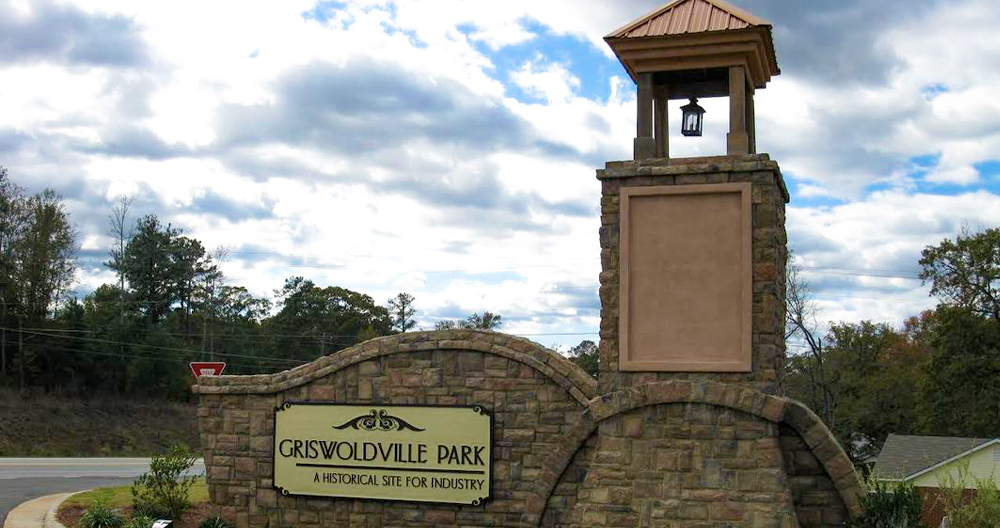
Negotiations with a hyperscale data center prospect ended March 12 when the Jones County Development Authority voted unanimously to put the sale of Griswoldville Industrial Park on hold.
The vote came after an executive session that lasted more than an hour to discuss real estate and potential litigation.
A letter of intent to purchase the industrial park for $25 million was signed Nov. 23, 2025, between the authority and Eagle Rock Partners LLC. Included in the agreement are clawbacks, meaning the buyer would have to reach certain milestones to keep the property.
The potential buyer would have to inform the authority within three years of the end user of the site, which are often companies like Google, Amazon and Microsoft.
The other clawback required the site to be developed and at least $400 million invested within five years. If either of those were not met, the authority could buy it back for $1, keeping the $25 million purchase price to further develop the park or other sites, according to the LOI.
Why a data center?
While controversy surrounds water and power usage for data centers, any industrial prospect to the park will have substantial utility requirements.
JDA board member Chris Weiters pointed out that most RFIs —requests for information that typically come from the state— are for industries that require more water and sewer than a data center.
“It also doesn’t require the use of rail, which is another potential impact for neighbors nearby,” he said. “And they would have significant buffer areas around the site, particularly between their core buildings and the rail.”
JDA executive director Haley Watson compared the data center prospect to an RFI she received from the state in December.
“I didn’t respond to this one,” she said. “It was 1.7 million gallons of water per day and close to 600,000 gallons per day of sewer.
While the data center would require about 500,000 gallons to prime the system, after that, water and sewer needs would be about 20,000 gallons per day for sanitary use by employees.
Unlike most other industrial prospects, a data center under the current environment doesn’t seek local tax incentives.
“This is a very attractive prospect for the county and for the park because we haven’t had any discussions about any tax abatements,” Weiters said, “while the economic impact of this $5-6 billion investment would be transformational to the county.”
Unlike large manufacturing facilities, a data center would not have a lot of truck or other vehicle traffic, either.
According to JDA attorney Kevin Brown, the authority was not willing to budge on the clawbacks as part of its long-term strategy.
“The authority held a hard line that, if we’re putting our trust in you that you’ll develop the site because an undeveloped site sold for $25 million means we have to go to another site to try to get the economic development goals,” he said.
Brown also spoke about the community’s investment in the park.
“The [county] commissioners had a large investment in this development authority site and worked hard for 20 years to develop that site, paid for with tax dollars,” he said. “The authority wanted to try to maximize that return both in dollars and in economic development. That was going to be the least impactful we could do for the most return we could get.”
Varnadoe echoed the investment the commissioners have put into Griswoldville Park.
“This group of commissioners has been investing in that park again, getting the grant, helping us do more things out there,” he said.
Without industrial development, Weiters said the county will be affected by other development regardless.
“The largest coal-fired power plant in North America is directly upwind of Jones County right across the county line,” he said. “The data center in Twiggs County and two in Morgan County have been approved. We’re going to get all of the impacts and none of the benefits if we don’t put something in the one place in this county designated for industry.”
What is the development authority’s role?
“It’s really short and simple,” Watson said. “Create jobs and bring in capital investment.”
The director added schools are a big factor.
“My kids go to school here,” she said. “They need better opportunities. Some of our schools need some improvements. Our teachers are leaving. They don’t make enough money.”
Watson explained that tax revenue paid by industries would go to both the county and school system.
When an industrial prospect looks at a county, it starts with an RFI, usually from the state, seeking specific information about what the industrial park and community can provide as far as utilities and incentives.
The development authority board — made up of volunteer members who live in the county — then determines whether or not to move forward based on how the industry would fit the site and community.
There are no guarantees in the process, so each side can end a deal at any point, from RFI to due diligence periods.
The economics
According to a presentation by the Middle Georgia Regional Commission, 64% of Jones County’s tax base is residential while only 3% is industrial. Homes cost more money than businesses as they need utilities, law enforcement, education and more. Industries provide more tax revenue to the community than they cost.
Because of the lack of diversity in the county’s tax base, Jones County has the second-highest millage rate — which determines the bottom line on tax bills — in the MGRC’s 11-county service area. The highest is Twiggs at 37.31, followed by Jones at 32.8. Putnam County is the lowest at 17.225.
According to the MGRC, at 10% industry instead of 3%, the digest would increase by $70 million and decrease the tax rate by 2.4 mills, or $420 for an average home.
The JDA commissioned a fiscal impact analysis of a data center in Jones County with Economic Impact Group LLC.
For the county, the capital investment over 20 years is estimated at $30.1 billion, creating 450 jobs with an average wage around $100,000. The resulting sales taxes, property taxes and other sources of revenue would bring in $521 million before expenses. Those expenses to government services over the 20-year period is estimated at $5.2 million. That could provide $19.8 million back to county residents in reduced ad valorem taxes.
That’s just the county. On its own, the school system would bring in another $574 million over 20 years with $5.7 million in expenses.
That brings the net present value —using today’s dollars instead of forecasting — to $644 million over 20 years.
These reports can be found by clicking “Informative Session Q&A” at developjonesco. org.
Housekeeping
During an influx of open records requests, the JDA was notified that the new address of the business development center at 102 E. Clinton St. was not on the agendas and not correct on the website as required by open meetings law.
Further, a motion at the February meeting caused concern over its vagueness because it concerned executive session discussion.
“Members of the public were confused as to what the actual motion was at the last meeting,” Brown said at the beginning of the March 12 meeting. “A motion was made to authorize the chair to move forward with the matter as discussed in executive session. My suggestion would be is to clarify that as to continue negotiations of the real estate matter discussed in the executive session.
“You’re reviewing the minutes right now. So I would just make that suggest that amended amendment to the minutes.”
The motion to amend the minutes passed unanimously before Brown moved the discussion at correcting previous agendas. Watson had recorded executive sessions were due to economic development, but they should have been listed as real estate.
“It was regarding Griswoldville Park sale,” the attorney said. “And that’s economic development. Haley noted it as that because we had state projects, which was the economic development side.”
Brown clarified that the clerical error went back six months.
The board unanimously approved revising prior agendas and affidavits to reflect the change.
