
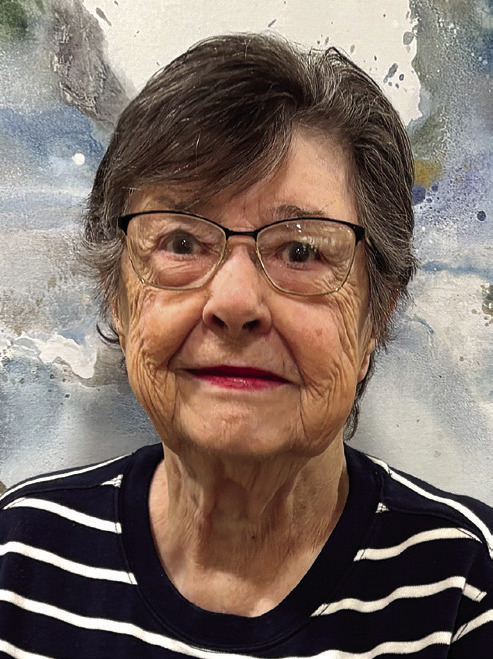
‘God moves in mysterious ways’ is a saying — paraphrased — with which Hazel Farmer definitely agrees.
Farmer, who will be 90 in November, retired from her career just over two years ago, and her decision was somewhat forced upon her. After a considerable time away from the gym, she decided one day to return. While exercising the very first trip, she suffered a treadmill accident and broke her shoulder.
“I had to wear a brace, and I couldn’t. There was too much pain. And so I couldn’t,” she acknowledged. “I knew I needed to retire, but I didn’t want to. So I said, ‘Well, I guess God is telling me it’s time;’ so I quit.”
Farmer was a court reporter and still actively working in hearings, depositions, and trials when she broke her shoulder. She started her reporting career at the age of 17 and worked less than a month shy of 70 years.
Hazel Cravey lived in Milan before the family moved to Warner Robins, where her father worked on the base. She was one of seven children, though one passed away as an infant.
“Mama was the one — with that many children, Daddy worked — to take care of six children, but it was great. Mama instilled in us faith, family and church. You looked after each other. She was the disciplinarian; no foolishness. If she told you to do something, you better do it. Or there were consequences.
“But we all loved each other,” Farmer stressed, “and then we hated each other at times, just like any other family. There were squabbles, and then Mama would make us hug, make up. And we hated that hug right at that moment, you know?
But we appreciated it. It taught us.”
The church was an important component of the Cravey family life.
“We were at church when the doors opened,” Farmer said. “We had a good upbringing in the church. Daddy wouldn’t let his girls play cards. We didn’t drink, we didn’t smoke, we didn’t cuss.
He didn’t punish us, but mama would. He never did any discipline; that was mama’s job.”
Farmer explained that social opportunities were not prevalent in her childhood.
“We didn’t have a TV when I was growing up.
Shortly after I married, we got a TV,” she recalled.
“We didn’t have a lot of social life unless it was associated with the church. There were no movies out where we lived. We did go roller skating,” she added. “There was a roller skating rink.”
Early career start
Farmer never went to college or even a technical school, and she actually started her career while in high school.
“I got all of my training for my shorthand and typing at Miller (High School),” she said. “In 1954 I was 17 years old, and my shorthand teacher told me there was a Federal court reporter who wanted to interview some students to hire. I went for the interview, and he hired me.
“I was so young that I couldn’t get my notary public license because you had to be 18, and I was 17. So, the attorneys had to swear the witnesses.
I couldn’t swear in witnesses until I reached 18 and could get my notary public.”
Farmer was able to accomplish another important feat at the age of 18. Her future husband, James Farmer, was the son of friends of her parents.
He attended business college in Macon and the University of Georgia before being drafted while in college. Following his military service, James Farmer moved to Macon, where he and Hazel met through her sister’s husband. They met when she was 15 and married when she turned 18.
“He’s the only person I ever dated,” she smiled.
“Never dated anyone else.
I just fell in love with him immediately. He was so kind and so good. Such a gentleman.”
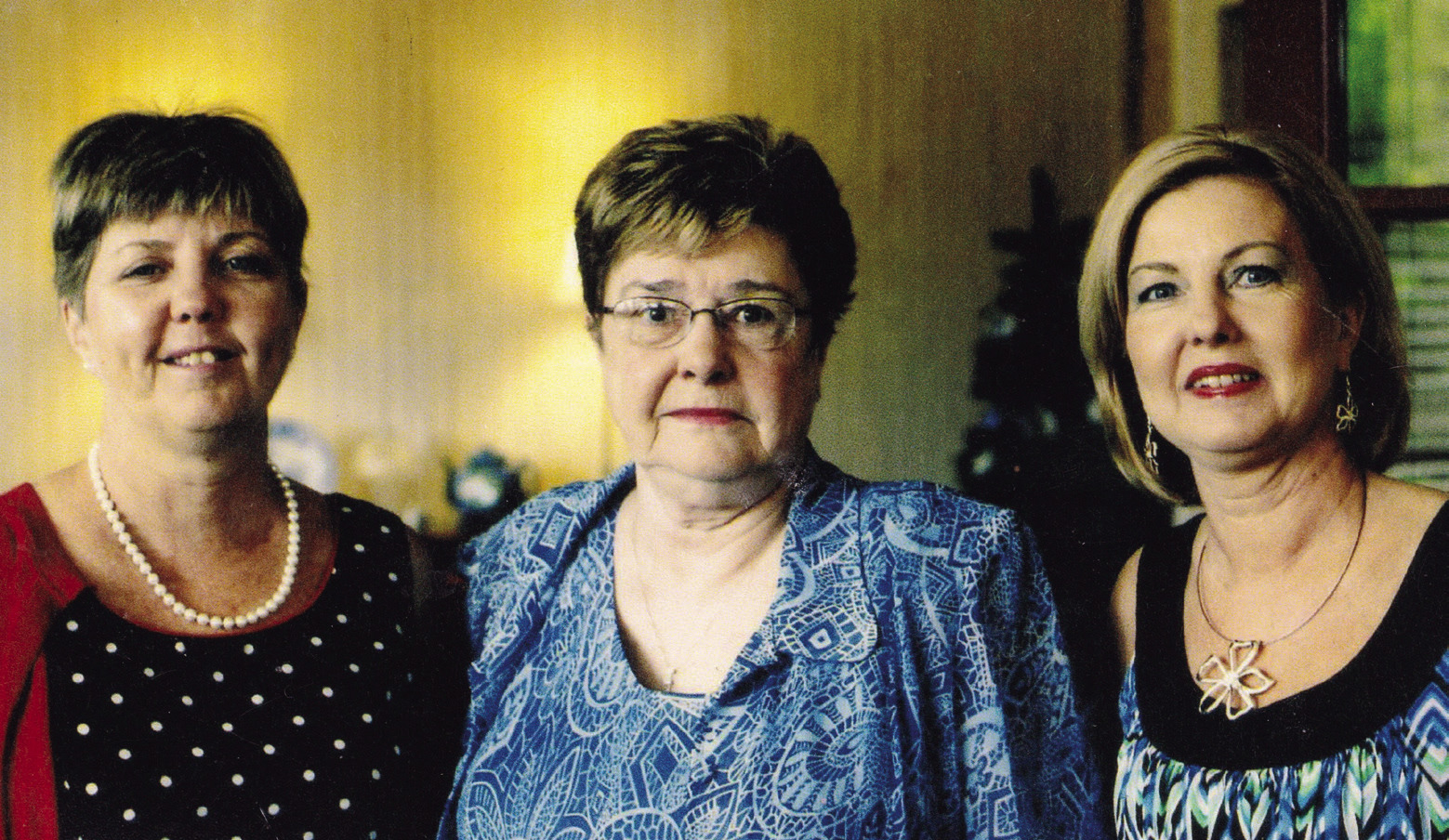
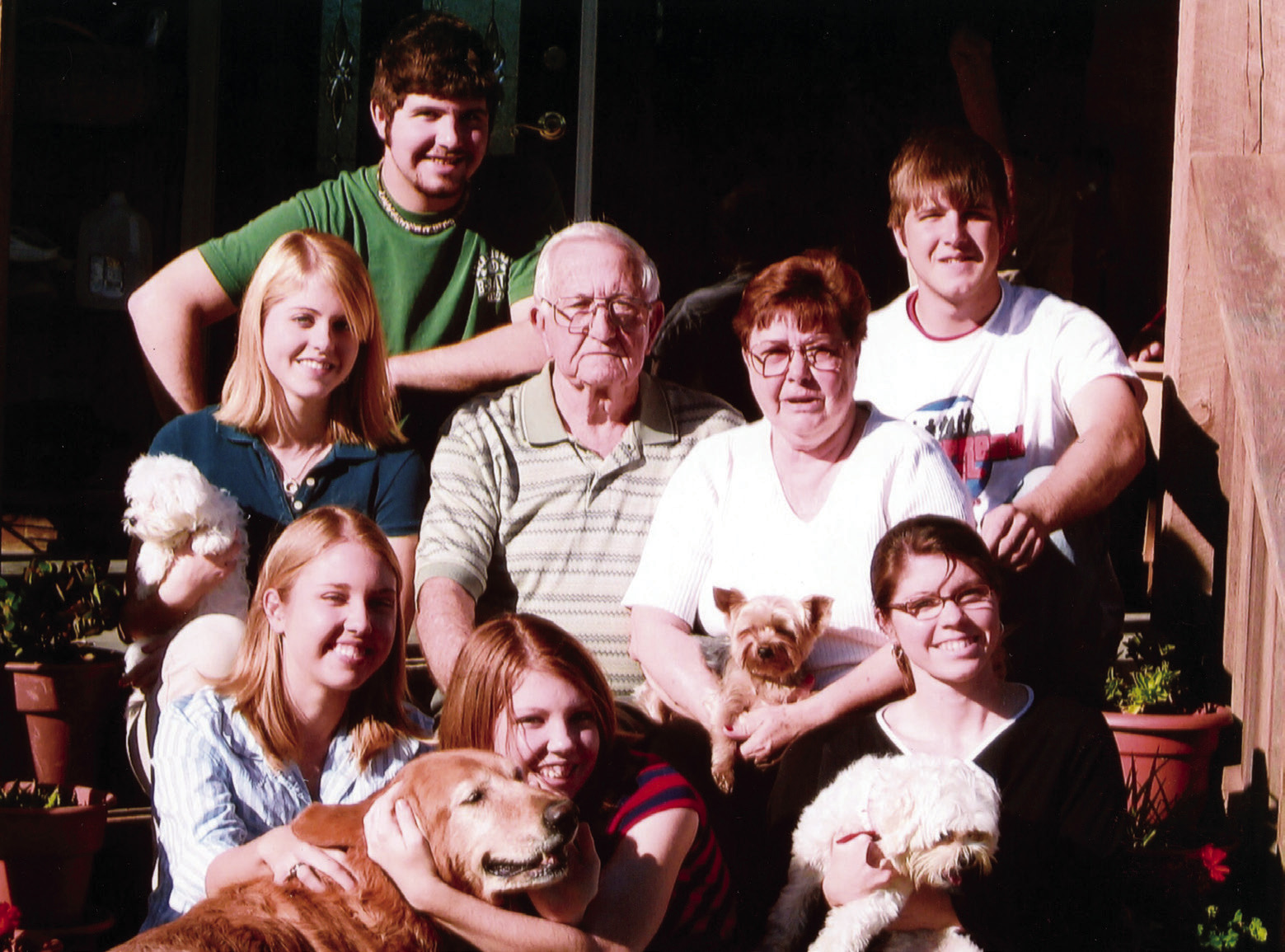
James Farmer passed away in 2006 of leukemia, leaving behind his wife and two daughters, Denise and Debbie. Farmer purchased a home in The Pines subdivision, not too far from Debbie, wife of former Gray Mayor Jason Briley, in the early 2000s.
However, she sold it following her accident and moved into an apartment in Brookstone.
Farmer started her reporter career with Claude Joiner and worked for him 21 years. “He was a federal court reporter, and he trained me.
“In 1975, Joyce Horne and I purchased his business,” she pointed out.
“He had a freelance court reporting business as well as being the federal court reporter.”
Farmer continued working as co-owner and recalled judges for whom she reported.
“The first federal judge that I worked for was Judge T. Hoyt Davis from Vienna, and he was blind.
He had a law clerk and someone who would help him get to the courtroom but didn’t go in with him.
But he was a brilliant man.”
The long-time court reporter said Judge W.A.
Bootle was “one of the most brilliant men that I’ve ever met.”
She recalled the year of the big snow in Macon.
It was his day to give the charge to the jury.
“We had a break, and the doors were locked to the courtroom. Everybody in the building was gone.
Everything had closed up.”
She said she told the judge she had to go see about her children, but he insisted she join him while he finished his charge.
“I told him I had to know my children are home.
He said, ‘It’s taken care of.
I am going to finish this charge, and we’re going to lunch.’ And we went to the Green Jacket. He was just that kind of man.”
Horrible case, but also fond memories
Farmer has no idea how many hearings, depositions, or trials she has reported — thousands, she said — but there is one she will never forget: the trial of Carl Isaacs, who brutally murdered the Alday family in south Georgia. The case made national headlines for months.
“Isaacs. He made me shiver,” Farmer recalled.
“I glanced at him, and he looked like he had no soul.
His eyes were so black and what he did so vicious.
That was the worst case I ever worked on.”
Isaacs was originally tried near Albany, but it was overturned because the DA and the trial judge were related, according to Farmer. The case was retried in Houston County in front of Judge Hugh Lawson.
“The lady, the mama that was not killed, was the only person in that family left, and she was there every day. Every day.
Isaac’s brother was one of the ones that were there during that. And he testified against his brother. It was horrible.”
Farmer does have a fond memory of that trial, however.
“When Judge Lawson came in, the courtroom was packed,” she recalled.
“And he welcomed everybody. He looked down and saw me. He didn’t know I was going to be the reporter because the clerk called me and got it all set up. He looked out there in that courtroom and he said, ‘Y’all got to excuse me a minute. Just a minute.’
“He came down off that bench, came to me. I stood up, of course. He grabbed me and hugged me and he said, ‘This lady taught me to practice law, and I had to come get a hug.’” Farmer can attest that the technology in 1954 was worlds apart from that of today.
“We had manual typewriters, and we had to use carbon paper for copies,” she frowned. “Now, that’s a long time before we got our copy machine. So, if you had to have five copies of the transcript, you used carbon paper and did five copies.”
The changes didn’t come quickly, she pointed out.
“We got the electric typewriter, and that made it easier, but you still had to have all the papers. When we got the copy machine, that was wonderful.
“I had been practicing for a long time when we got the electric typewriters, then soon after, the computers.”
There have been, of course, more technological improvements in recent years, and Farmer learned that two generations can make a real difference in discussions regarding them.
“My little grandson is very technology-minded,” Farmer said. “He’s nine years old, and the last time I saw him, he said, ‘What kind of technology did you have in school?’ I said, ‘a manual typewriter,’ and he said, ‘What’s that?’”
