
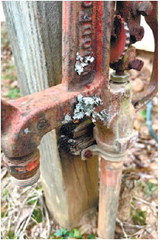
We have entered into the time of year where I get called or emailed about these fuzzy or fluffy green things growing on trees or shrubs.
What you are seeing is a lichen (pronounced like-en). Right now, you will literally find these organisms on anything and everything. I took several pictures for this article, and their location was anything from trees to fence posts to spigots.
The most common questions asked are “What is this” and “How do I get rid of it?”
Lichens are fairly diverse symbiotic organisms classified as a fungus. Typically, lichens will partner with algae or cyanobacterium. Either algae will convert sunlight and carbon dioxide into food for the lichen, and the lichen protects the algae from drying out. Also, the lichen receives water from the air and the organism it has partnered with. To this end, symbiotic relationships that occur in nature is quite fascinating, but understandably, most people are more concerned with the damage being done to whatever plant it is found on. Fortunately, if you find lichens on trees or shrubs, the lichens themselves are not causing any harm to the plant whatsoever.
I have seen some trees that are absolutely covered in them, and it can be rather unsightly, but they are not causing any damage. The main reason you will see more now is because the leaves have fallen.
Since the leaves have fallen there is no way to shade the sunlight and the lichen grows through photosynthesis from all of the extra light. You will sometimes see lichens on parts of the tree or shrub not shaded by the canopy during the growing season, but when all of the leaves have fallen you can really see them thrive on all parts of the tree.
I typically do not make chemical recommendations for removing lichens because they will more or less go away when the tree or shrub canopy returns in the spring. Plus they are only there because the algae is present. However, lichens are indicator organisms, and their presence is a sign of possible poor plant health. If you’re seeing a lot of lichens in the winter, there is an easy explanation. If you are seeing them during the growing season, then your tree or shrub more than likely needs some care, and you are probably seeing issues with the canopy as well. Once the overall health of the plant is improved, then the canopy should become fuller and prevent the availability of sunlight to the lichens. To reiterate, if you see them in the winter time, there is probably no issue if you have not had previous issues with the plant. If you see them in the spring, summer or early fall, then you may need the plant checked out to determine what needs to be done for the plant. As always, if you have any questions on lichens or other agricultural related issues, or you’d like to schedule a site visit for the Ag Agent to look at an issue you’re having please call the Jones County Extension office at 478-986-3958 or email brennan4@uga.edu.
