
Do not commit crape murder
Brennan Jackson
Jones County Extension Agent
We are in the middle of pruning season for a good many ornamental plants.
Pruning is a great tool in your tool box to promote growth, prevent disease, provide a better aesthetic look, and promote overall plant health.
Pruning will encourage your plant to grow, flower, or fruit.
Pruning allows you to prevent a plant from overcrowding other plants, and allows those plants to maintain proper health.
Depending on the circumstances, some plants may need corrective pruning to cut out diseased foliage or damaged foliage caused by insects or environmental conditions such as freezing.
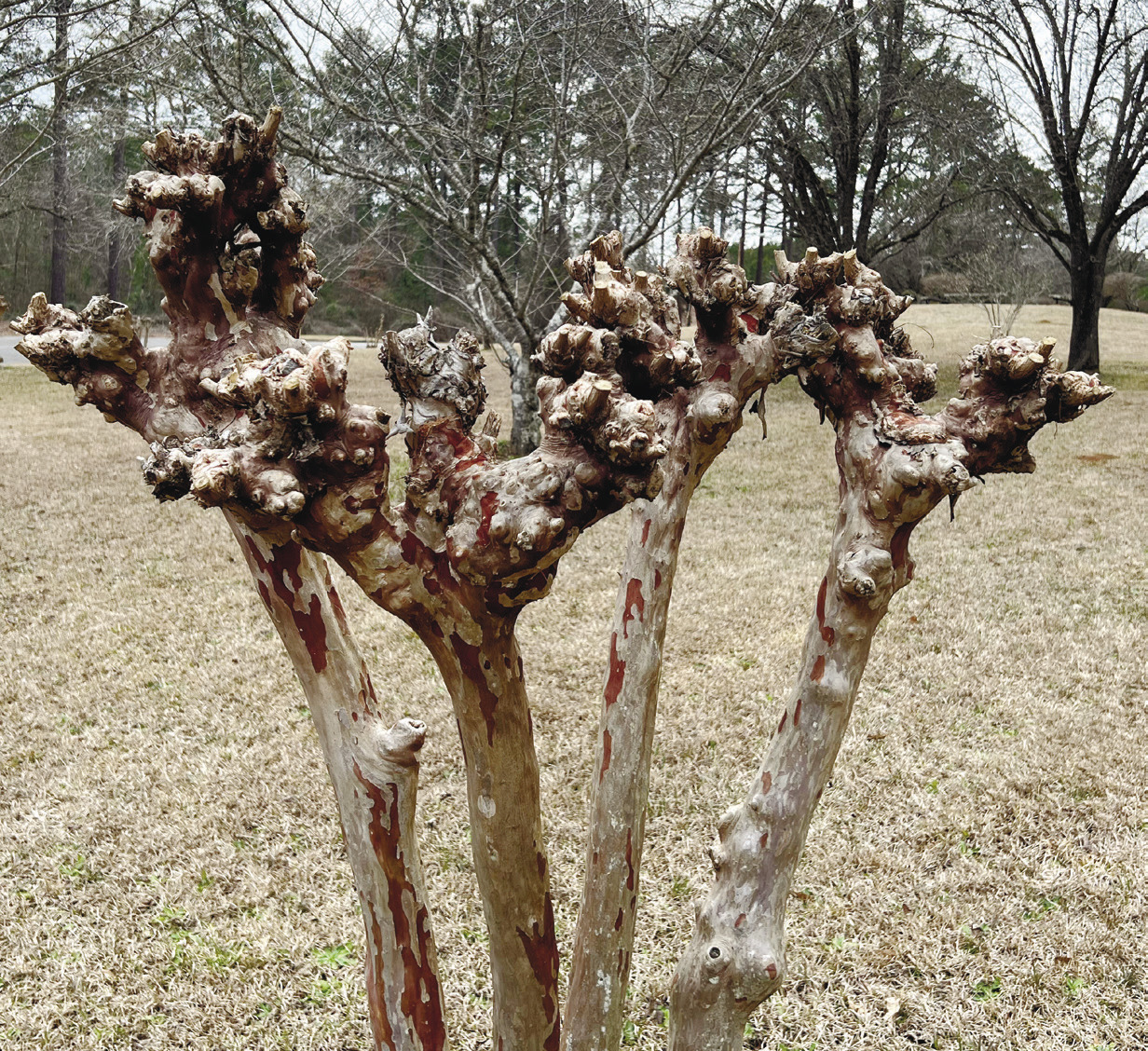
Unfortunately, one of the most egregious pruning crimes committed in the plant world is against Crape Myrtles. Many Crape Myrtles are pruned so badly that there is literally a name for it: Crape Murder.
Crape Myrtles come in tree varieties and shrub varieties which should be taken into consideration when purchasing because that will determine the height and width of the tree or shrub, but there is a very common practice where the top of the tree will be chopped off in order to maintain a certain height or shape. This method is referred to as “topping”. This is considered severe or heavy pruning that is often times unnecessary. So, what is the big deal about topping Crape Myrtles because everyone does it? When you cut off main branches weaker shoots takes their place, and those weaker shoots are not as capable of carrying the weight of the leaves and flowers. Severe pruning can delay flower development. Also, the result of severe pruning leaves unsightly trunks that look absolutely terrible and unhealthy.
How then should Crape Myrtles be pruned? In reality, these trees and shrubs are actually very low-maintenance, and they only require light pruning. First, assess the tree to see if there are any damaged limbs. If so, cuts those limbs back to the nearest branch or trunk depending on the location. Remove any suckers that are growing from the base of the trunk. Remove any branches that are touching, crossing over the main trunk, or branches that are touching a home or structure. Remove any branches that are diseased or have insect damage. Lastly, you can remove the tips of branches that have seed heads to encourage flowering. However, all of these reasons to prune should be done on an as needed basis. When pruning as needed the tree is healthier, looks better, and is allowed to grow how it is intended to grow.
For more information about pruning ornamentals or other agricultural related questions, please contact the Extension office at 478-986-3958 or email brennan4@uga.edu.
