

As we ponder the many facets of life in the early settlement of Jones County, we are forced to stop and come to the realization of just how old our County truly is. Upon its inception in 1807, we stood on the frontier with eager settlers filling the area trying to establish a new beginning or simply awaiting an opportunity to see just what lay in wait across the mighty Ocmulgee River.
Prior to the Treaty of Indian Springs Jan. 8, 1821, lands west of the river were still considered Indian territory.
With the expanse of the territory between the Ocmulgee and Flint rivers open to settlers following the treaty, many pulled up stakes and moved west. On Dec. 9, 1822, Bibb County was formed out of portions of Houston, Jones, Monroe and Twiggs counties.
Prior to this new formation, Jones County extended along the Ocmulgee River to its intersection with Twiggs County. East Macon was all Jones County.
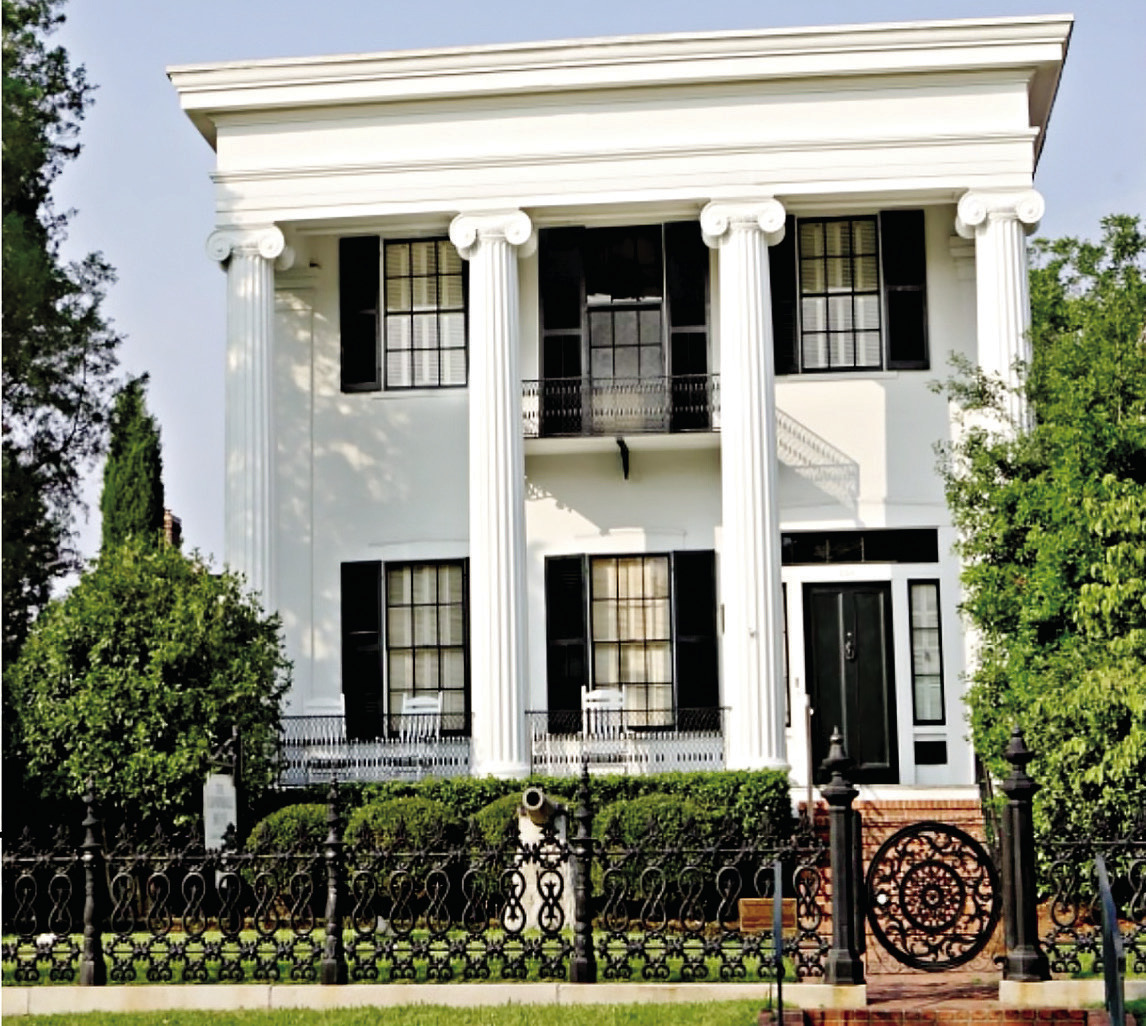
Through the passage of time, many who were raised in Jones County went on to become prominent citizens of Bibb and other counties of the state. There has always been a close connection between the adjoining counties. You do not have to look far to find Jones County history within Macon. One such place is the home of Judge Asa Holt, today known as The Cannonball House, at 856 Mulberry Street.
Built in 1853, the home has received its fame from being struck by an artillery shell that was fired into Macon in July of 1864. Union artillery was positioned at the Dunlap Farm (present day Indian Mounds) by Union General George Stoneman during his raid on Macon. As Stoneman and his troops returned to Sherman’s army in Atlanta, they came through Clinton and then proceeded north up present-day Georgia Highway 11. They would be captured at Sunshine Church, between Round Oak and Wayside, in Jones County.
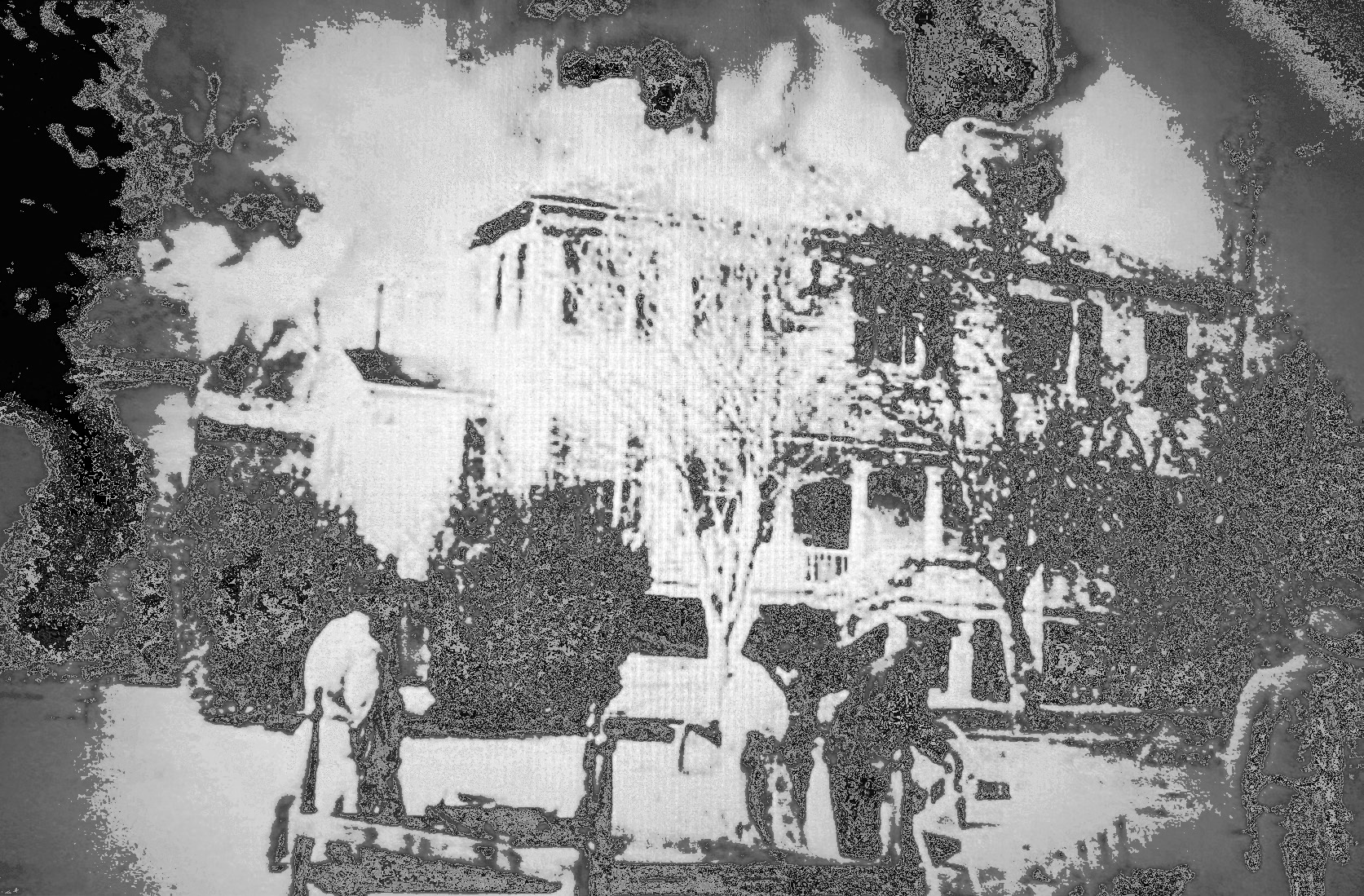
Within its collections, this historic home contains several pieces of Jones County history. The magnificent Daniel Pratt-designed home, Lowther Hall, located in Clinton, tragically burned down in 1941. As the home burned, people hurriedly pulled its furnishings to safety in the gardens. The 10-footlong dining table and chairs, now at The Cannonball House, came from Lowther Hall.
In the original brick kitchen behind the house is a large, great wheel, used for spinning thread during the 18th and 19th centuries. This wheel was donated by Harriet Madison from Jones County.
The beautiful hand-woven coverlet in Judge Holt’s bedroom was woven on the loom of the Jarrell Plantation in northwest Jones County.
This coverlet’s unique pattern is known as the Moon, Sun and Stars pattern. The intricacy and detail it displays coupled with the long hours of work and love makes it hard for the 21st century mind to comprehend the patience it must have taken to make.
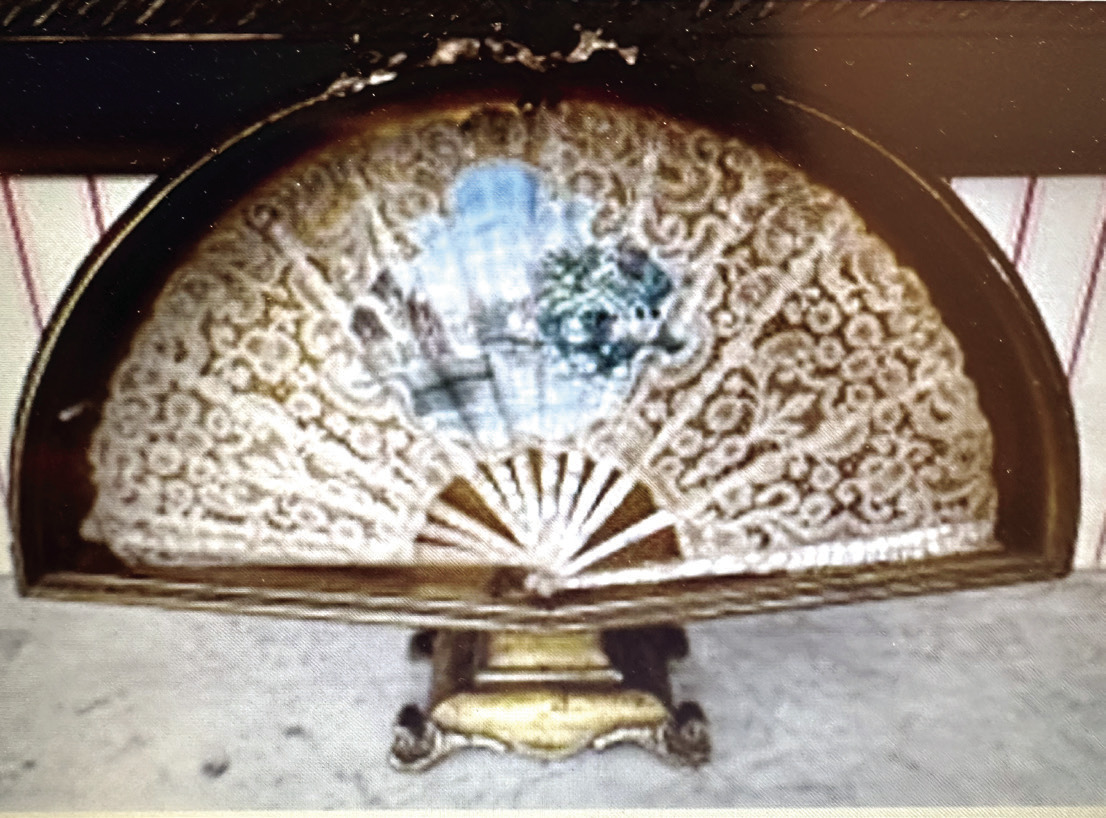
The fan was a social accessory and a valuable tool of a lady during the antebellum era. These collapsable fans could measure up to 16 inches in length and were adorned with beautiful decorations.
In that time, flirting was frowned upon, and social communications were more often carried out by sending flowers or calling cards. The fan offered a young lady a discrete opportunity to express her feelings more privately. A left-handed twirl may mean that the couple was being watched, while a sweeping stroke across the face meant “I love you.”
What lent to the “ language of the fan” had more to do with sales than anything else.
To promote their sales, the term Fanology was created in 1797, which actually gave written directions packaged with their fans for how to use the fan to communicate with others, particularly a love interest. Dorothy Blount Lamar was born in Jones County and spent much time in the Gordon-Bowen- Blount House, which was moved from Haddock.
Lamar authored the book, When All is Said and Done, and donated several fans to The Cannonball House. This ornate oriental fan came complete with its own glass display case.
The 1853 home and its furnishings represent that period of history, and its artifacts can transform the visitor back to that era. Among some of the rarest possessions of the House is a collection of weapons built by Samuel Griswold at his factory in Griswoldville. The Governor of Georgia, Joseph Brown, commissioned pikes early in the war, and Griswold was one of the first to be commissioned for the work.
A pike is much like a spear on a long, wooden shaft that has blades extending in three directions. It was thought at the time to be an excellent weapon to defend against cavalry. In addition, Griswold built some 3,500 brass framed revolvers, patterned after the Navy Colt. He would produce more revolvers than any other manufacturer for the Southern armies. The Cannonball House has both a Griswold pike and a revolver on display, along with many other weapons and uniforms.
A recent acquisition was the frock coat of Lt. Colonel Algernon Hamilton, a resident of Clinton. The coat is in very good condition, which is a rarity for clothes of that era. In addition to Hamilton’s coat, there are five other military coats on display.
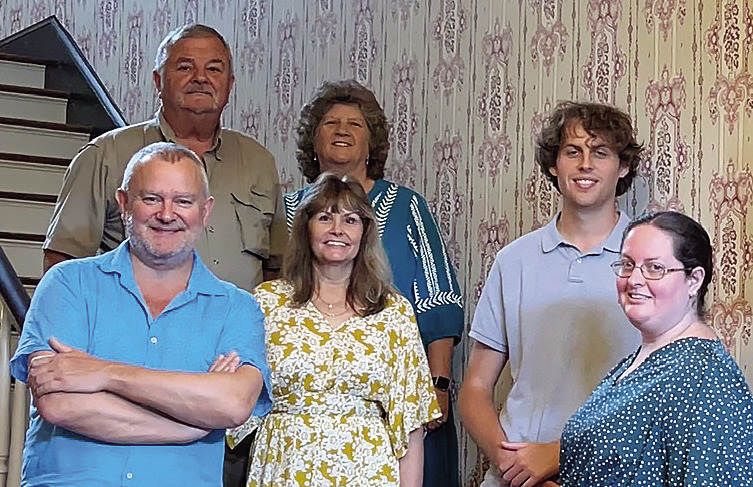
Jones County has three of its citizens who currently serve on the Board of Directors for The Cannonball House. International guests quite frequently visit the home, and we are privileged at times to be present and can meet them. Such was the case on Aug. 5 when Hugh Bonneville and his son Felix were on a tour of America and made an appointment to come by and see The Cannonball House.
Bonneville played the role of Robert Crawley, 7th Earl of Grantham, in the renowned series Downton Abbey. The Bonnevilles were both great gentlemen and were fascinated to learn about the house and its collections.
Time pulls these artifacts in many directions with their locations being lost to those whose family originated them. While it is nice to be able to see items of this era in other locations, it is especially nice to be able to know exactly where they came from and how they piece the puzzle of our local tapestry together.
We love sharing these collections and telling their story.
