
The weather is just now starting to feel somewhat normal for this time of year, but to a certain degree we are not seeing the volume of insects and diseases you would normally expect to see right now due to the cooler temperatures.
One particular pest who is making its presence known at the moment is aphids. There are roughly 1,300 species of aphids in North America, but only a handful of species are considered pests.
They are primarily green in color, but can be black, brown, white, yellow, pink, etc. Aphids typically grow to roughly 1/8th inches long and have a pearshaped body. Also, they exclusively feed on plant sap which is what makes them problematic.
Aphids and their eggs are found on the underside of leaves. Their eggs are usually in a cluster which makes them easily recognizable. When feeding they jab their mouth parts into a plant’s phloem cells to retrieve the highly sugarbased nutrients. However, in order to obtain the right amount of nitrogen for their diet they tend to overconsume.
After they overconsume they excrete sticky honey dew which coats the leaves which attracts ants whom protect the aphids from their natural predators.
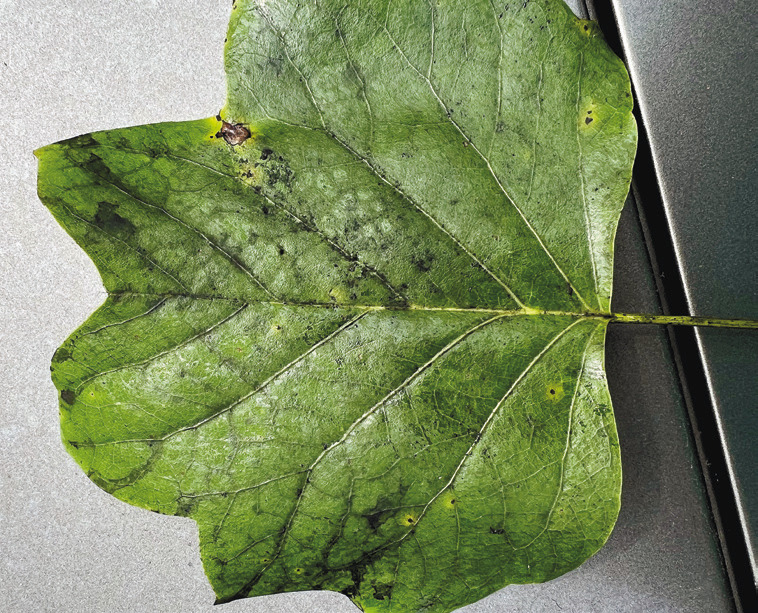
The secretion typically turns black on the leaf and with a heavy infestation the dew will drip off of the leaves. This blackening of the leaves can inhibit the photosynthesis process if a large enough portion of the leaf is covered. Just this week I visited two locations where the secretion dripped from the leaves of the tree to noticeably get on you.
Additionally, aphids have a fairly wide host range and tend to feed on many parts of leaves and flowers. The sticky secretion and blackening of the leaf are a tell-tale sign, but seeing either eggs or the aphids themselves are the best way to diagnose the problem.
Which management method for aphids to utilize is going to depend on the type of plant and the level of infestation. In many vegetable gardens you can simply wash them off with a hose. This method will not prevent them from coming back, but it will provide a quick fix. Horticultural soaps and oils like Neem oil work great in instances like vegetable gardens or flowers, but for large shrubs and trees a more in-depth approach is necessary. If a tree or large shrub is infested, then a soil drench can be done using a 21% imidacloprid pesticide. In this instance, the roots will soak up the pesticide and translocate to the leaves. From there the aphids will feed and receive the dose of pesticides necessary to manage them. Since this is an insecticide it does not harm the tree in any way to perform this drench.
For more information regarding managing pest populations or other agricultural issues please contact the Jones County Extension Office by phone at 478-986-3958 or email brennan4@uga.edu.
