
Planting a garden is extremely beneficial from sustainable food production to mental health improvement. On the other hand, planting a garden is a lot of work, takes some level of expertise, and can be heartbreaking when the plants do not produce or a pest invades. I tend to harp on preventing weeds, managing insects, and preventing disease, but there are times where I fall victim to not necessarily following my own advice. This year I planted my garden in raised beds.
There are a lot of pros to planting in a raised bed, but one of the driving factors to produce vegetables in this manner was that you can pack a lot of plants into a small space within reason. I have zero weeds, only a few insects that are causing any real damage, and have not seen any disease… until this week.
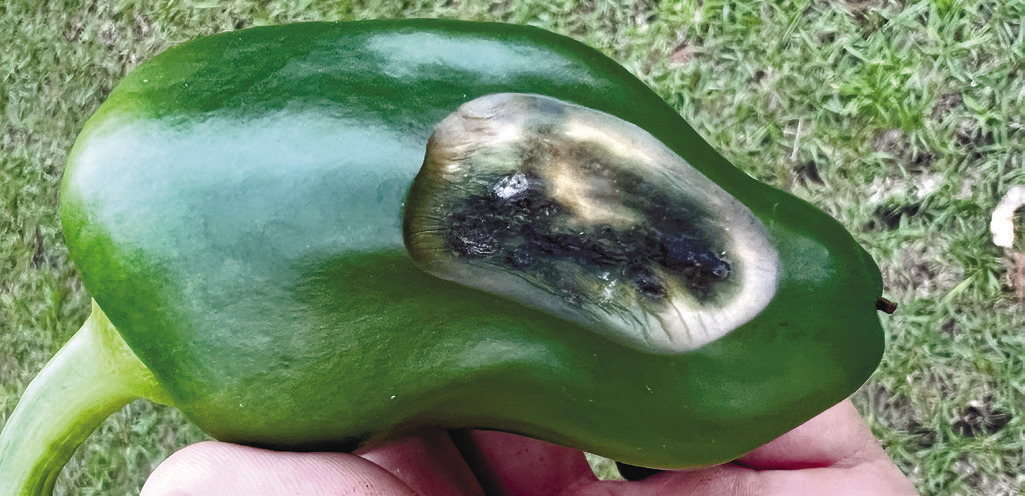
This green pepper shown in the picture not only has disease, but it has been infected for a little while now. One way to tell that it is a disease and not being eaten by either birds or insects and then decaying is that there are not peck marks or signs of insects on the damaged tissue. Secondly, the diseased tissue was sporulating which is the more important sign. Why then did this pepper develop disease? First of all, it has been very humid lately, and the recent rainfall we’ve had has left things rather moist. Secondly, I planted the peppers to close together, and now that a canopy has developed it is not receiving the air flow that is necessary.
Therefore, this particular pepper succumbed to an almost perfect storm of environmental conditions favorable for disease.
From the signs of the sporulation I had a fairly confident diagnosis of what this disease was, but I also found some sporulation that was not consistent with my diagnosis. After examining the spores microscopically, I found that this pepper had both Anthracnose and Alternaria. Both of these pathogens cause leaf spots which will affect the fruit as well. There are some things that can be done/could have been done to prevent diseases.
Pathogen free seeds are the best preventative measure when planting, but avoiding overhead irrigation will prevent creating a favorable environment and transmitting disease.
Another management method is to scout your garden for signs of disease so that you can be prepared if/when it appears.
Fungicide treatments work best when applied preventatively and will not provide much assistance after the infection has occurred. However, outside of disposing of infected fruit there is little than can be done after the appearance of disease. By disposing of the affect fruit you are preventing further infection by removing the pathogen, but there is a high probability that the pathogen is not only present in a localized area.
For more information about vegetable gardening or other agricultural issues, please contact the Extension office by stopping by, calling 478-9863958 or email brennan4@uga.edu.
