
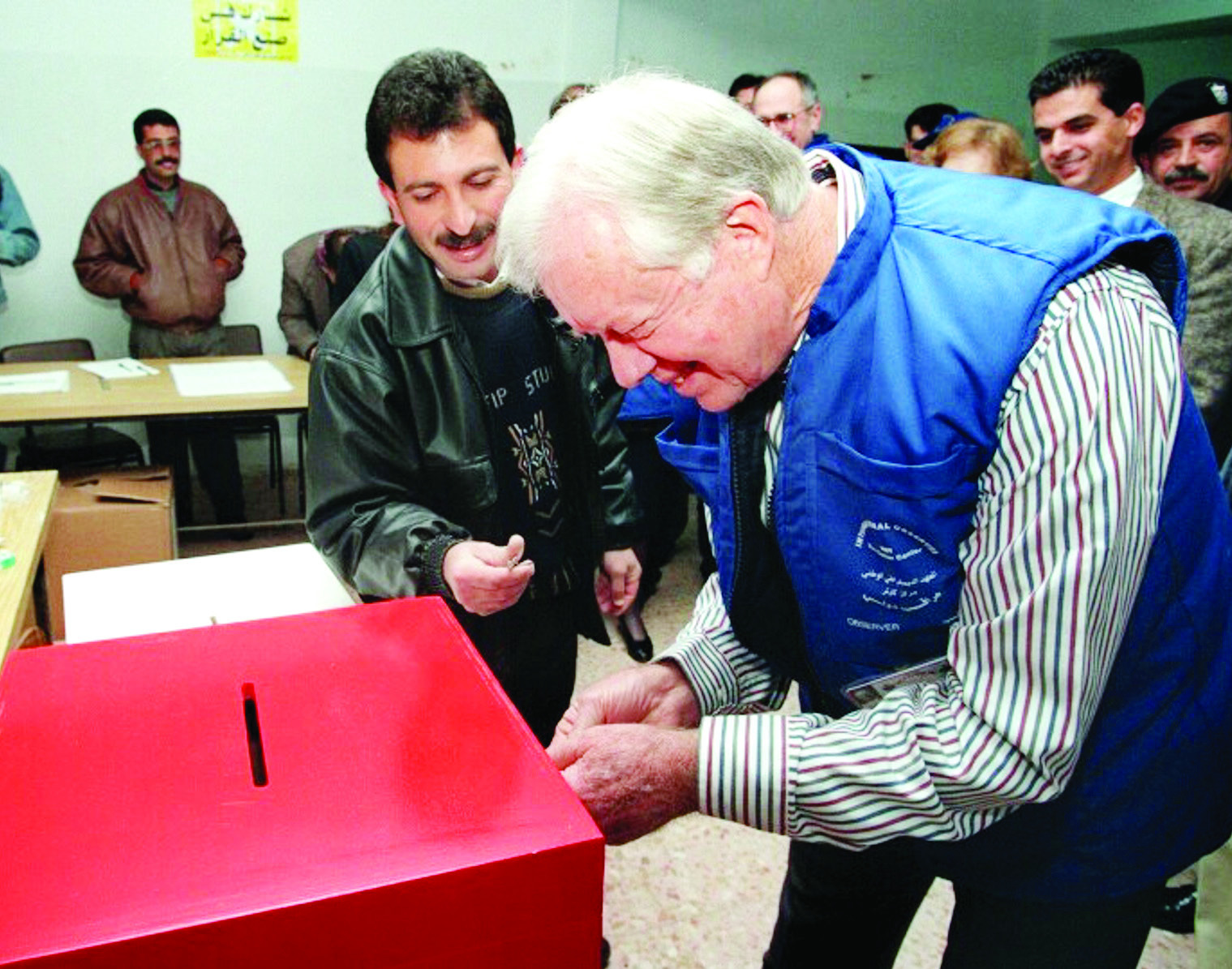
In the quiet hum of a Plains afternoon, Jimmy Carter often spoke of service not as a grand title, but as a simple, sturdy obligation. To understand Carter’s heart on voting rights, you must look past the policy papers and see the neighborly grace of a man who believes a democracy is only as strong as the welcome mat it lays out for its citizens.
For Carter, the ballot box was never just a political tool; it was the “great equalizer.” He saw firsthand the jagged edges of exclusion in the Jim Crow South, and it left a mark on his soul. He understood that when you keep someone from voting, you aren’t just winning an election — you are losing a piece of your community’s integrity.
His commitment to the franchise was an extension of his “citizen-first” philosophy of leadership: the government’s primary job is to serve the people, and you can’t serve someone if you’ve muted their voice.
During his presidency in the 1970s, and decades of “retirement” that followed at The Carter Center, Carter became the world’s most persistent advocate for the voting integrity. He didn’t just talk about democracy; he rolled up his sleeves and went to where the dust was thick, eventually monitoring elections in more than 100 countries.
Back home, his message remained remarkably consistent, even as political winds grew chilly. He championed universal registration and decried the hurdles — long lines, confusing ID laws, and the purging of voter rolls — that act as “fences” around the ballot box.
Carter believed that if your ideas are good, you don’t need to fear the voters; you just need to invite them in.
Jimmy Carter reminds us that voting is a sacred partnership between a leader and the led. It requires a generosity of spirit, a willingness to say, “Your voice matters as much as mine.”
In his world, a truly great democracy doesn’t just count votes; it honors the person behind every single one of them.
From April 20 to May 31, Georgia Writers Museum, the Old School History Museum, and Putnam County will present in Eatonton, Voices and Votes: Democracy in America, a very special Smithsonian Institution exhibit.
This major traveling exhibit has been adapted from the National Museum of American History’s exhibit, American Democracy: A Great Leap of Faith, exploring American democracy’s evolution, struggles for suffrage, and citizen participation through photos, videos, interactives, and artifacts. The legacy of Georgia Writers Hall of Fame honoree President Jimmy Carter will be a part of that exhibit.
— Contributed
