
No mulligan when it comes to the law
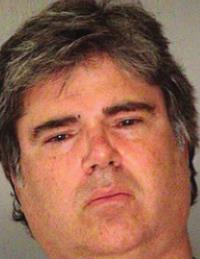
The road to a final resolution in the case of a Gray physician arrested in June of 2018 is filled with multiple twists and turns with the most recent being the court’s denial of the doctor’s request to withdraw his guilty plea.
The ruling of U.S. District Court Judge Clay D. Land of the Middle District of Georgia denying the motion of Dr. Thomas H. Sachy, 58, to withdraw the guilty plea was filed May 9.
Sachy entered his guilty plea June 21, 2021, and his motion to withdraw the plea was filed Feb. 9. The doctor’s original arrest was June 26, 2018, at which time he was charged with conspiracy to distribute and dispense controlled substances with his mother, Maureen Sachy, and office staff members Evelyne Ennis and Brandy Hamilton.
Thomas Sachy was also charged with two counts of unlawful dispensation and distribution of controlled substances resulting in death and serious bodily injury.
He entered a negotiated guilty plea to one count of unlawful dispensation and distribution of controlled substances, specifically lesdexamfetamine and oxydodone, before U.S. District Judge Tilman Self on the eve of his trial, June 21, 2021.
According to the plea agreement, Sachy faced up to 97 months in federal prison, followed by three years of supervised release. He agreed to forfeit approximately $833,000 in currency and real property to include his medical office building. He also agreed not to engage in the medical practice of pain medicine or seek to reinstate his DEA license to prescribe controlled substances while serving his federal sentence.
Following the entry of the plea, the defendant was taken into federal custody pending his sentencing, which was scheduled Sept. 7, 2021. The sentencing was rescheduled numerous times, and Jan. 25, a new defense counsel filed the paperwork to represent Sachy.
That change set up the possibility of one of the reasons listed in the motion to withdraw the guilty plea, ineffectual counsel.
In his order denying the motion, Land noted that after the hearing on the motion, Self, the judge who accepted the guilty plea, stepped aside, and the case was reassigned to Land.
The order begins by comparing Sachy’s motion to withdraw his guilty plea to a mulligan in a game of golf.
“Unlike the rules of golf, the law does sometimes provide for a ‘do-over,’ but not under the circumstances presented here.”
Land went on to address other reasons brought up by the defense, including Sachy’s belief that he would receive time served and be released after entering his guilty plea.
“When he was instead taken into custody pending his sentencing hearing, the defendant came to regret his decision to plea guilty,” the order stated.
Land said under the federal Rules of Criminal Procedure, the defendant would have to establish a ‘fair and just’ reason to allow the withdrawal of the guilty plea. Those standards are whether the close assistance of counsel was available at the time of the plea, whether the plea was knowing and voluntary, if judicial resources would be conserved and whether the government would be prejudiced if the defendant were allowed to withdraw his plea.
“Having carefully reviewed the record in light of these factors, the court finds that defendant has failed to show that fair and just reason exist for allowing him to withdraw his guilty plea,” the order states.
Land said Sachy’s counsel provided effective representation and kept the defendant informed of the possible consequences of entering the guilty plea.
“The court rejects any suggestion that defendant was misled in any way.”
On the contrary, the judge noted that the defendant’s counsel negotiated a cap of 97 months for his sentence when he faced 25 years to life on the charges if found guilty at trial.
“The defendant’s counse was fully engaged and kep the defendant, who was an astute professional, adequately informed.”
Land said that factor weighed heavily against allowing the guilty plea to be withdrawn.
He described the colloquy between the court and defendant was a “model of clarity.”
The judge pointed out that the answers to the court’s questions to determine if the defendant was competent, that the plea was voluntary, and that he understood the consequences of pleading guilty were made under oath.
“The court does not find his change of heart demonstrates that he was being untruthful at the plea hearing.”
Order conclusion
“Just as the golfer must (with limited exceptions) play the course as he finds it and the ball as it lies, Defendant must accept the consequences of his actions. Having entered a knowing and voluntary plea with the benefit of counsel, defendant does not get a second shot under the circumstances presented here. Defendant’s motion to withdraw his guilty plea is denied.”
