
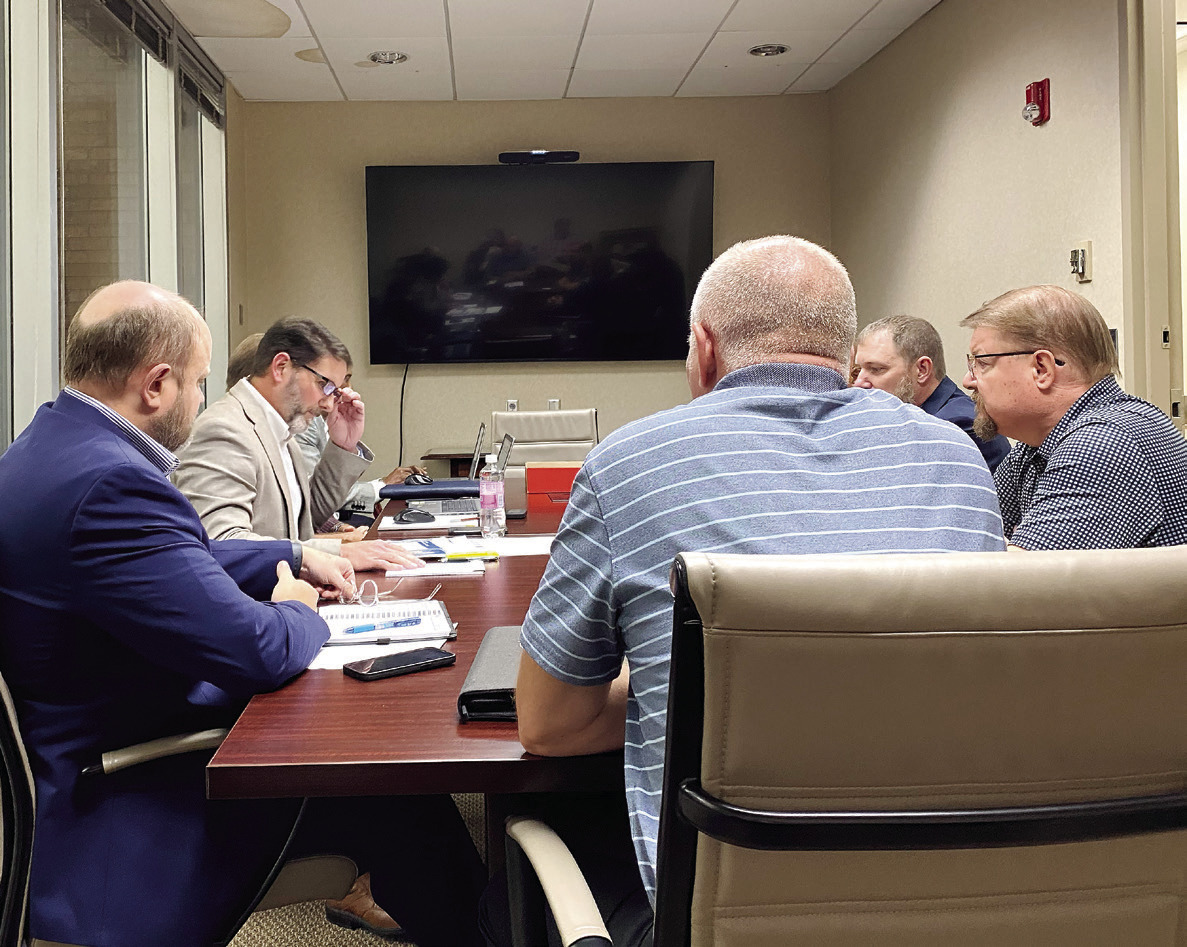
Jones County received another boost to its 2023 Sales Ratio following an arbitration last week that was the last step in a process to correct the county’s failing report.
At the conclusion of the Nov. 6 Ratio Study Arbitration that took place in the Bibb County Assessors’ Office in downtown Macon, Jones County’s Sales Ratio number was increased from 31.43 to 33.94.
The increase was the second in the process. Prior to the Oct. 1 Sales Ratio Appeal, the county’s sales ratio for 2023, according to the DOAA study was 31.26. The target sales ratio for a passing score is between 36 and 40.
The appeal took place Oct. 1. The county was represented in the appeal by Stan King, CEO of GMASS Appraisal Services, who was secured by Jones County Chief Appraiser Anthony George.
A peer review of the Jones County Board of Assessors by the Georgia Department of Revenue took place in between the appeal and arbitration. The results of that review have not yet been received.
Three Chief Appraisers from other counties are selected as part of the arbitration process to hear presentations from the county involved and the DOAA. Each side chooses a chief appraiser, and a third appraiser is selected by those two appraisers.
The three arbitrators for the Nov. 6 arbitration were Chief Appraisers Tommy Knight of Walton County, Stephen D. White of Cobb County and Steve Swindell of Cherokee County.
With all parties present, the meeting began a few minutes before 4 p.m.
Lee Thomas, director of the Sales Ratio Division of the Georgia Department of Audits and Accounts, was the first to present.
All Jones County Commissioners were in attendance for the arbitration.
Thomas talked about issues with Jones County property values. He said there had been increases, but the bottom line was the increases were not enough and not uniform.
The director said the increases centered around sold properties. He said 64 precent of the properties where values increased were in the five percent range.
Thomas said, because of low property values, the rollbacks for inflation were low. He noted that 29 other Georgia counties were in the same boat as Jones County with an average ratio of 32.07, but 129 counties were in the target range.
The director gave the example of Putnam County that had increased its property values by 74 percent. He reiterated that Jones County had changed a lot of property values but not enough.
Lee was asked the question of how many sales were sampled for the ratio study, and he said 139.
King presented the same arguments he had in the appeal. He basically objected to the way the DOAA tabulates its ratio study. He said they use bad data. The speaker said the DOAA uses more current data, which means the two parties are using different data for the calculations.
King said he has been fighting this fight since the method was changed in 2010. He contended the DOAA should not select random sales but calculate the ratio using all the sales.
His presentation showing Jones County’s internal calculations had Jones County with a sales ratio of 37.
“This is not just a Jones County issue; it’s a state issue,” King said.
George was asked how many assessors Jones County has, and he said three with one more in training. The appraiser attributed the issues in Jones County to lack of staff and that the current staff needs more education.
After hearing from the presenters, the arbitrators left the room to deliberate. They returned about 15 minutes later with their decision to increase the ratio to 33.93. No reasons for their decision were given.
