
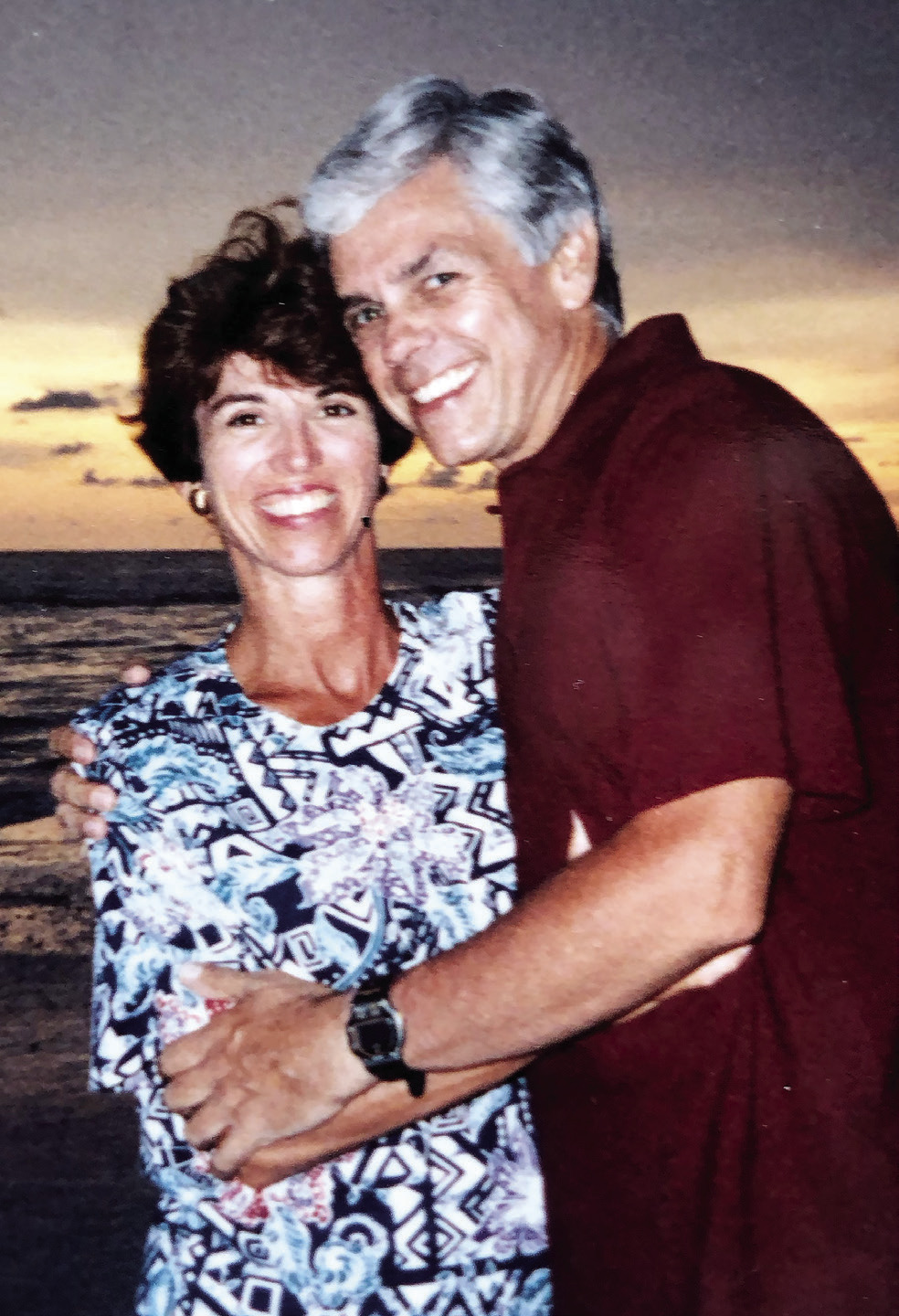
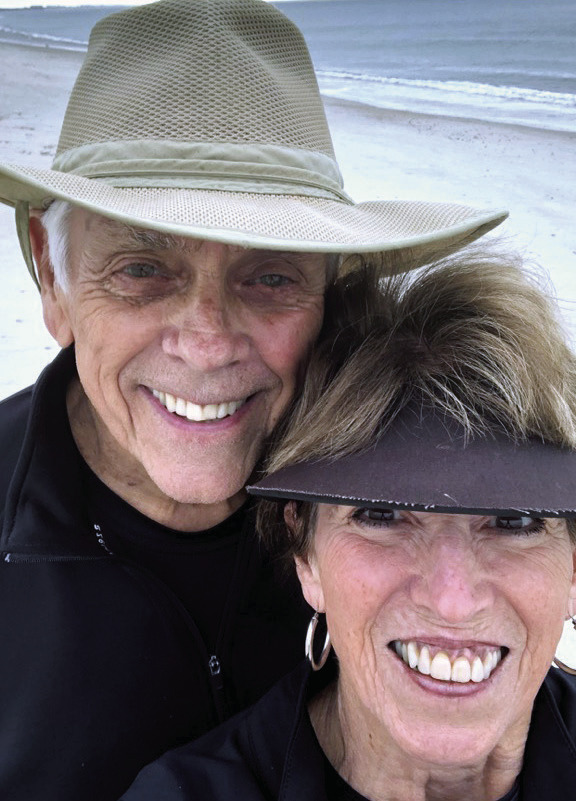
While Hoyt and Sally Brown have been ‘together’ for more than 52 years, there were many times during the past half century they were not actually together.
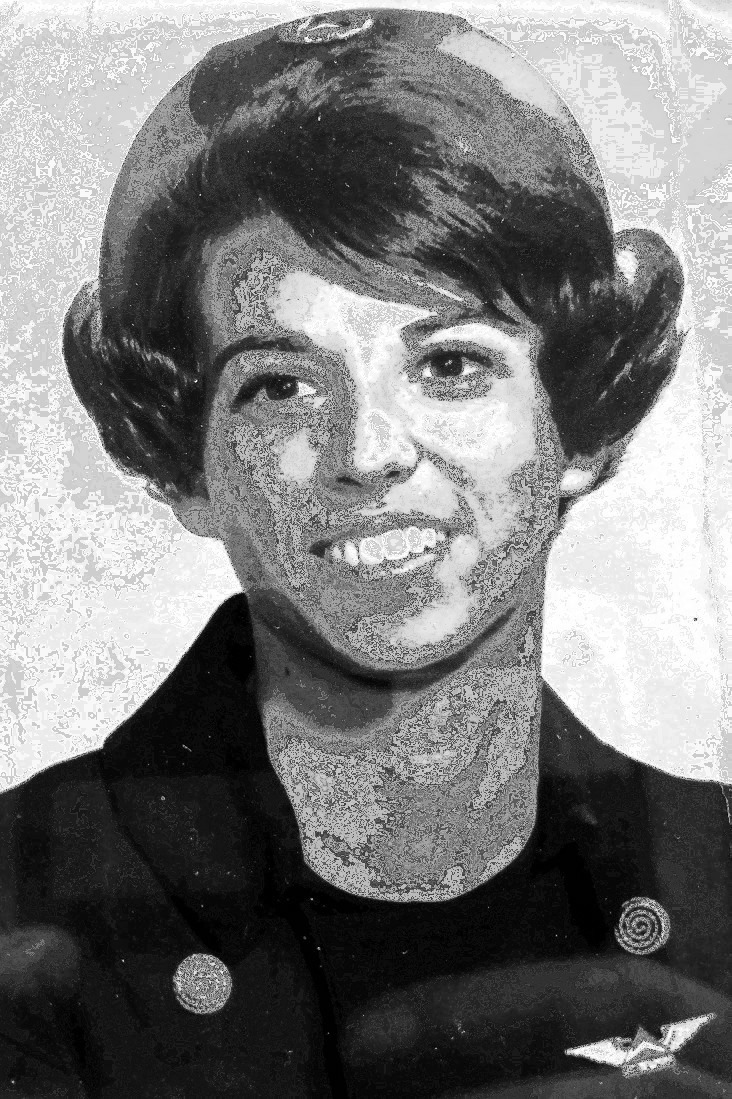
Brown and the former Sally Wicker met in 1970 and have been married 52 years, and they both worked for airlines for their adult life. However, he was mostly on the ground with Eastern Airlines and other companies, and she was in the air as a flight attendant for Delta.
Hoyt Brown, who turns 84 Jan. 25, was born in Macon but moved to Atlanta as a youngster and graduated from Murphy High School. Sally was born and raised in the Haddock community and graduated from Jones County High. She graduated from Valdosta State College and went to work with Delta in 1969.
Brown was active in his high school years.
“I almost got into politics,” he said in an interview last week. “There were 13 Atlanta city schools, and I was president of Murphy High School in 1959. Then I got to be president of the Atlanta Association of Student Government.
“I got to know quite a number of people,” the retired executive said, “and the dean of women at Georgia State said, ‘I expect to see you in Georgia politics if you stay around here.’” Brown said he did not stay around since he ended up with Eastern Airlines. He explained that he got a job as a part-time ticket agent at Hartsfield International while still at Georgia State University. The young man who had the job flunked out of school and had been drafted. Brown took his place.
“I got to tell you,” he began, while his wife rolled her eyes, “I got to help more good looking women who wanted to be helped. It was the best job; they could have not paid me anything, and Iwould have hung around out there!”
Brown earned his undergraduate degree at Georgia State and decided to go on and obtain a master’s degree. He later interviewed with a clothing manufacturing company in Dublin before going to work with Pure Oil Company, helping establish franchise service stations.
Brown, however, did not feel that was his career job and ended up getting a full-time position with Eastern.
“It wasn’t long before I finished my MBA, and I got to go to corporate staff in Miami.”
He shared that he was in the customer service policy development group for cargo and passenger service.
Sally Wicker, meanwhile, had moved into an apartment in Miami and was at an outing with a friend. She had enjoyed water skiing while at Valdosta State and was watching others that day. She recalls first seeing her future husband then.
“He came up out of the water from skiing and came up, and we got to talking. He said, ‘ya’ll must be from the South.’ We talked some more, and they invited us to go to a party.”
Brown told her he was originally from Macon, and she was surprised.
“I said, ‘You’re from Macon? I’m from a little town outside of Macon.’” “I’d never even heard of Gray or Macon,” Brown said with a laugh.
Brown worked for Eastern in Atlanta, Miami and Chicago before eventually landing in Houston, where he stayed 25 years. He spent his last five years with Eastern as city manager of sales and service before he moved over to the Horne Company in 1982.
“I became vice president of the largest, privately owned commercial real estate company in Houston,” Brown pointed out. “I was vice president of marketing and administration.”
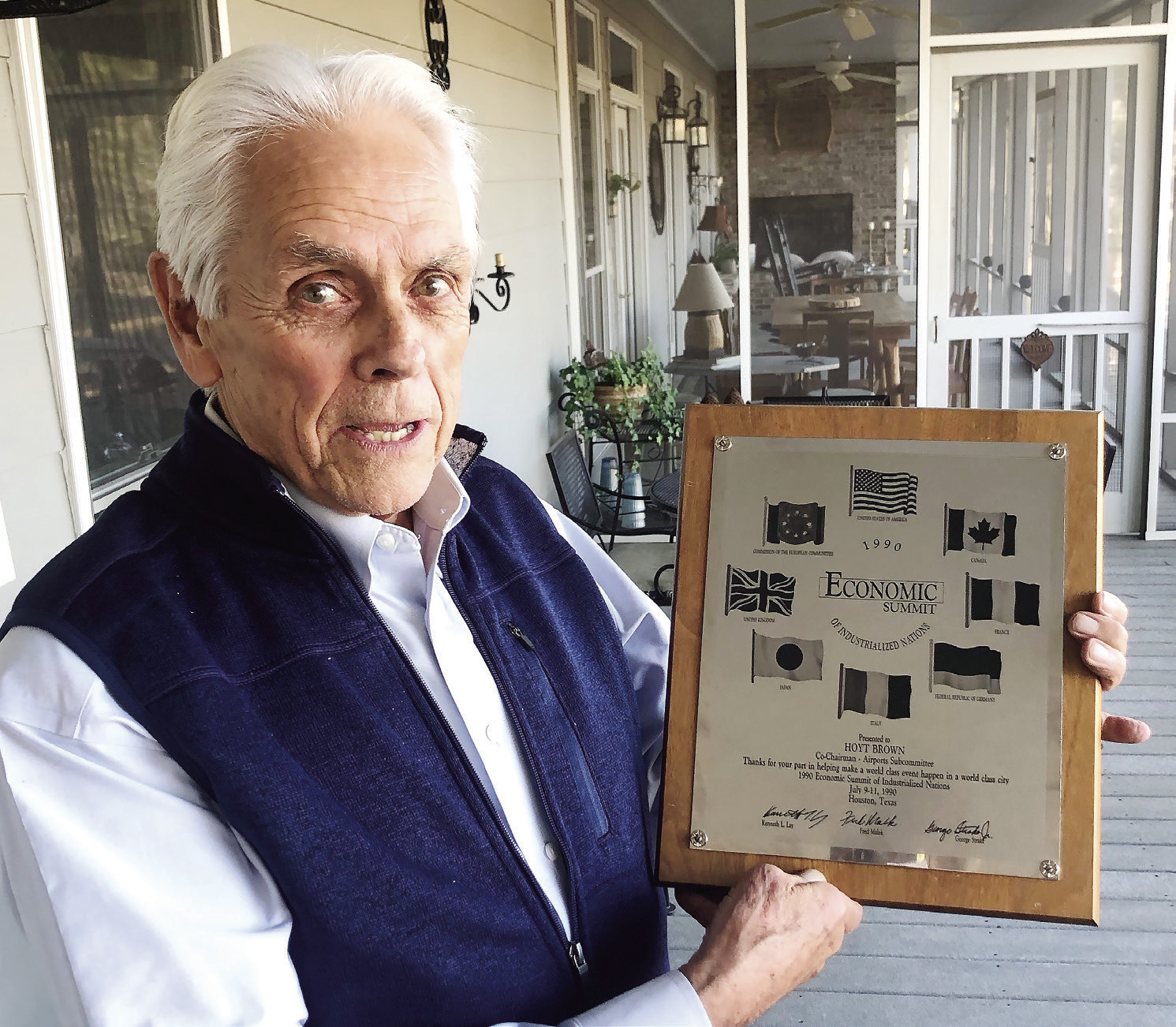
Brown went to the Houston Airport System (HAS) in 1987 and stayed there until 2003. One achievement of which Brown is very proud is the airport in Ecuador. He said that country was probably in the bottom third economically in Central and South America and had a serious problem with its airport.
“It wasn’t very safe, and they had been trying to rebuild the airport for 25 years,” Brown noted.
He convinced Houston City Council to participate in the endeavor to overhaul the infrastructure. A development corporation was established, and RFPs were sent out. One requirement was the inclusion of an international airport that served at least 25 million people per year and have a mechanism to satisfy the RFP, which Houston had.
“I wound up getting state department money to satisfy the RFP. And,” Brown continued. “I was getting a salary, but I wasn’t smart enough to get what I should have been smart enough to get.
“I was always afraid of the grey line. You’ve heard of the grey line? There is a grey line between a shrewd businessman and a crook,” he quipped.
Brown pointed out the project was mutually beneficial.
“They couldn’t have done it without airport training,” he emphasized. “And, the City of Houston over 20 years gets $25 million for training those Ecuadorians, and today it’s one of the safest airports down there.”
With Sally flying on Delta around the country — and later the world — and Hoyt traveling much of the time, often outside the United States himself, there would be a lot of time away from each other.
“We didn’t see each other a whole lot,” Sally acknowledged. “That’s why we’ve been in it so long,” she laughed.
“We wrote a lot of notes,” Hoyt interjected.
For a good portion of Sally’s flying years, she never had the opportunity to fly internationally.
“PanAm was the only airline that flew internationally when I first started,” she pointed out. “Later on, well into my career, Delta started going international.
“For about the first 15 years, I basically flew to Hawaii once a week, Honolulu. The last five years,” the retired flight attendant said. “I commuted from Houston to Atlanta and flew internationally.”
Sally retired in January of 2002, and Hoyt continued working for a while after the couple built their Jones County home in 2003 outside of Bradley on what was Wicker family property. They enjoy approximately 185 acres, two ponds and well-kept undergrowth among scattered trees.
While Sally grew up on a cattle farm, it has been something of a learning experience for one of them.
“I didn’t know how to hook up a bush hog when I got here,” Hoyt confessed.
As to a typical day, “We cut down trees and move rocks,” Sally chuckled.
“When the weather is good, we are outside most every day,” Hoyt said. “But I can’t jump out of the back of that pickup truck like I used to without busting something. I’m smart enough that I don’t want to bust something, so I get out gently.
“We enjoy keeping the place up, but it’s getting closer and closer,” he acknowledged. “The day is going to come when we can’t do it.”
Sally explained that they have their designated areas to maintain, and it takes a lot of time.
“We have a full-time job mowing,” she said, but added, “We love it! Or we wouldn’t do it.”
Sally accuses her husband of being a very detailed person, and his outlook may confirm that.
“What I really enjoy doing is seeing a project and making it happen,” he declared. “Go and do it.
“If you plan it right, and the plan is realistic and achievable — not saying, it isn’t going to be difficult or a bunch of bumps in it. But if you think it through right, then you can execute it.”
Since his retirement, Brown has been a member of the Jones County Rotary Club and a president of the local Chamber of Commerce. He recalled the time that a contingency of Jones County officials made a trip to the governor’s office to discuss the inclusion of Jones County in the area with increased emissions, leading to higher fees and gas prices.
“What happened was,” he explained, “apparently Baldwin County wasn’t asleep. Bibb County and Macon weren’t asleep. But apparently Jones got hooked with an additive that had to be put in to offset the emissions that were burning up Atlanta.
“So we went up to see the governor about it. We asked him could you help get this all fixed up, so Jones County doesn’t have to be in that?
“He said, ‘Why did y’all wait till now to come see me?’ Nobody said anything. So I said, ‘Well, governor, we thought timing was very important; so we waited for the man that could do something about it.”
Brown likes to share the story of a U.S astronaut, Frank Borman, who was captain of the Gemini Seven flight in 1965 and Apollo 8. Borman was in Brown’s office and talked about the flight to the moon.
Brown recounted that Borman had told his family he was sure the crew would get to their destination, but he was not sure they would make it back. He did not want to surprise anyone if that should happen.
“I was wondering why anyone would take such a risk, and I said, ‘Frank, why would you do that?’ You know what he said? ‘For my country.’”
