
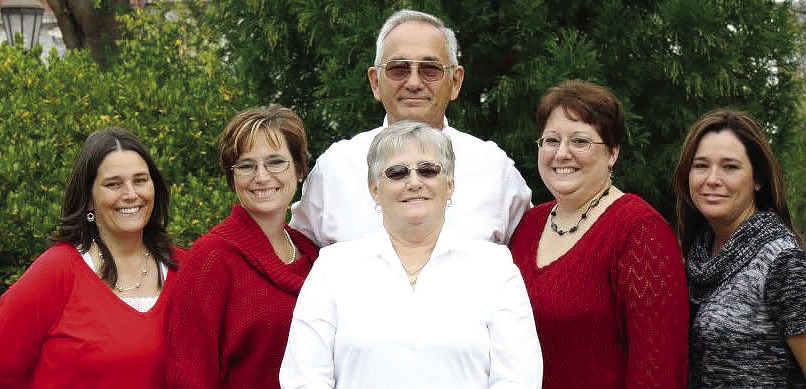
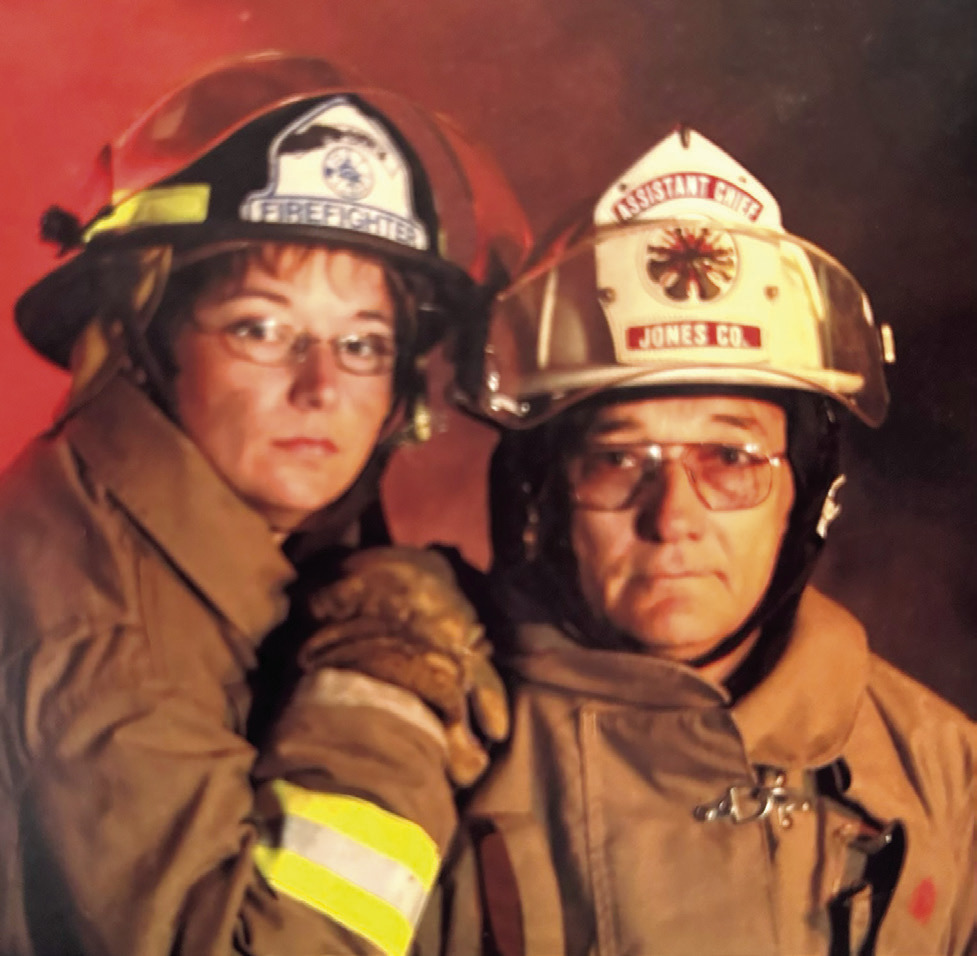
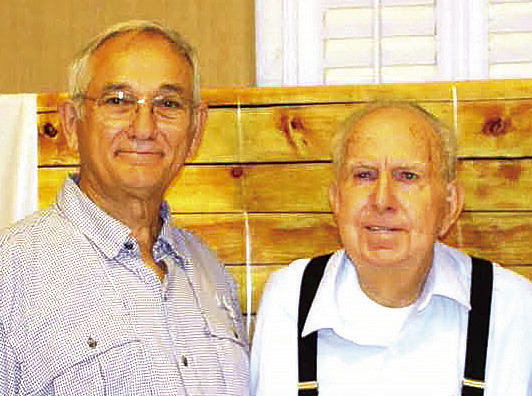


Individuals and even families who provide valuable services don’t always make the headlines, and Bobby Coulter’s clan is a perfect example of that truism.
Coulter and his wife and daughters were volunteers in the Jones County Fire-Rescue Department for years, answering hundreds of emergency calls. They seldom made the news, however.
Coulter, 78, grew up in East Macon and, until he was 17, lived where the Coliseum Hospital is now located.
“Urban renewal came in and bought Center Street and what have you in that area,” he said.
His family had moved one block over to Church Street when he happened to get behind a school bus one day in 1965. Joyce Kitchens was on that bus.
“She was flirting with me,” Coulter said. “She was on the school bus, and I was driving my car to school. I went to Lanier, and she was going to Miller at the time. She and some girls on the backseat flirted with me. So I just followed them on over to Miller and parked the car, got out and went up and talked with them.”
That discussion led to a date, and about a year and half later, their marriage. Before they got married, however, Coulter joined the Army Reserves and was on active duty for six months.
“I lived with Uncle Sam down at Fort Benning, and then I went to Bethesda, Maryland, to attend machinist school. When I came back, Joyce and I got married.”
The couple had a long life together before Joyce passed away in 2024.
“Would have been married 57 years last year since she died on the 12th of September, and our anniversary was the 15th. Fifty-seven years,” Coulter said. “I miss that girl.”
The couple had four daughters — Tammy, Tonya, Tisha, and Terri — and one son, Robert Jr. (Bobby), who died when he was just 1 year old. His death led to what in large part defined Coulter’s life.
The couple first lived in Macon, then Dry Branch before moving to Henderson Road in Jones County, where they stayed until buying property on Morris Stevens Road in the immediate vicinity of her father, W.O. Kitchens.
After working with two companies, Coulter landed at Georgia Kaolin in Dry Branch in 1975. He started out as a millwright apprentice, then promoted to millwright, where he stayed until he moved into management four years before production ceased.
“I worked at the chalk mine for 32 years,” he said. “I retired in 2007 when they came in and told us they were going to shut Georgia Kaolin down and lay everybody off.”
Though he was not going to be terminated immediately, Coulter volunteered to take the early retirement, subject to conditions.
“I said, ’If you give me a good enough severance package, I’ll tell you bye.’ They did, and out I went. I was 60 years old when they sent me to the house, and at 62 I started drawing my social security.”
Meanwhile, the Coulters’ fourth child, Bobby, was born in December of 1974.
“When my little boy was born, he didn’t have an immune system,” Coulter noted, “and from the time he was 9 weeks old, till just before he died, he was in the hospital. “He was initially in the Medical Center in Macon, sent to Augusta, then back home.
Coulter stated that his preacher mentioned that his sister worked at the National Institute of Health in Bethesda, Maryland, and he’d been talking to her.
“She worked in a heart unit, and she said, ‘Why don’t you send him up here? Let’s check it out.’” The entire family went to Maryland. Joyce flew with little Bobby, and the girls rode with their dad. Coulter was given time off work and was out three months before Georgia Kaolin told him to report, even if it was for one day. He began commuting.
Coulter said the hospital provided a motel room and meals for Joyce and the girls who remained there, and he gave plasma weekly to cover his motel cost.
He appreciatively pointed out he had local financial aid as well.
“And the people at Jones County gave to my son in a bank account enough money to keep my bills paid and furnish me money to go back and forth.”
Coulter never forgot Jones County’s help.
“I said, ‘I won’t ever be able to pay them back.’ And, I knew we didn’t have an ambulance service here, and I wanted to start one.”
He helped do just that. Following little Bobby’s death in January of 1976, Coulter went to EMT school. When Allan Green took over as Civil Defense (later Emergency Management Agency) director in 1977, he appointed Coulter as his deputy director.
“When Allan hired me, I made a suggestion to him about putting a rescue (division) in, because emergency management had a form of rescue. They had done the ropes and stuff like that, so we put some equipment on an old truck we had, and we started running rescue calls.”
Coulter wanted more than part-time volunteers for emergencies.
“We didn’t have an ambulance here,” he pointed out. “I worked to try to get one stationed here. We had one stationed here for a while, and they’d pull it, moving somewhere else, and I’d keep fussing with them, and we’d get another one.
“We put up a station here in Gray, up by where the old fire trucks are now, and we had an ambulance there. “
The efforts of Coulter and others eventually paid off as there is now an ambulance stationed fulltime in the county.
Coulter was the deputy director the same length of time he worked at Georgia Kaolin, starting two years later and leaving the agency two years after his retirement. The pay was quite different, however.
“We did it for years that there was no compensation whatsoever,” he declared. “I wore out four vehicles running rescue calls. But that was because we loved helping people. I never got compensated,” he added with no trace of regret.
That did not stop Coulter from doing what he enjoyed, and he stressed that the rescue unit was a family affair. Joyce and Terri especially were active, but Tonya was an EMT, her father said, and she answered calls as well. She actually ran rescue calls as a teenager with her good friend, Wendy Brown (Vaughn). But it was Joyce more than anyone else.
“I have actually left work and come and caught wrecks, things like that, that were either around (Highway) 49 or, if it was a major wreck, then I would come,” the long-time responder said.
“Me, or my wife, one of us went on every call that we had up until we got out of it,” Coulter declared, “because we felt like … we started it, and I always felt responsible for it. If I was at work, I wouldn’t just leave and come on a call unless it was major. But, she would answer the call if I was at work, and if I was at home, I would answer.
“And that was basically our life,” Coulter commented. “I used to love to hunt. I quit hunting. We did a little bit of fishing every now and then with some of the people in rescue. We would take off and go fishing in a creek or something like that. If we got a call, we would load up and go on the call.”
The retiree commented that Terri went with him most places, and he recalled a time they were in Houston County and decided to respond to a wreck call there. An ambulance was on the scene, and workers had pulled the victims out, putting one woman in the emergency vehicle, according to Coulter.
“Terri got up in the truck. She was about 14 or 15 years old at the time, and an EMT coming in told us she had to get out. The guy that was over that group said, ‘No, she can stay in there. She probably knows more than you do.’ So she stayed there and helped them in the ambulance until they got her ready to go.
“We got in the truck and came on to the house,” Coulter commented. “That’s just where we were. We enjoyed helping people. That was our way of paying the people of Jones County back.”
Coulter has not run a rescue call since 2009, when the Board of Commissioners hired Don Graham over him to take Green’s place as EMA director. He said he was told there was concern there would be a walkout of volunteers because he was not hired.
“And I said, ‘I don’t want anyone to walk off. I’ve put my life into this. We got it up like this. We want to continue helping people. I may not be helping them, but I got things going here to where they can do it. And just because I’m not going to be there, I wouldn’t want that.’”
